

The ongoing conflict between the U.S., Israel, and Iran is causing oil prices to surge back to $100 per barrel, leading to a global stock market decline on Thursday.
The S&P 500 experienced a 1.5% drop, resuming high volatility after a period of relative stability. The Dow Jones Industrial Average closed down by 739 points, or 1.5%, while the Nasdaq composite fell by 1.7%.
The main focus remains on the oil market, with the price of Brent crude reaching as high as $101.59 per barrel overnight, amid concerns that the conflict could disrupt oil production and transport in the Persian Gulf, potentially triggering a significant inflationary impact on the global economy.
Iran has intensified its attacks on oil facilities in Gulf Arab countries, aiming to exert economic pressure on the U.S. and Israel to end the conflict. As a result, cargo traffic through the critical Strait of Hormuz has been halted, through which one-fifth of global oil trade flows.
In response, the International Energy Agency (IEA) announced the release of 400 million barrels of emergency oil reserves, the largest volume in its history, to mitigate the impact on energy markets.
The U.S. also plans to release 172 million barrels from its Strategic Petroleum Reserve next week to counter the rising prices.
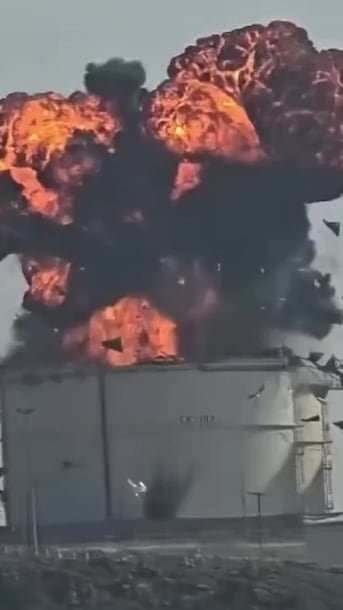
A video posted to social media Wednesday shows a drone strike on an oil storage facility at Oman’s Port of Salalah. CBC News verified the footage by matching the facility shown to maps and other pictures of the port, by comparing the explosion to other videos showing the facility burning and by confirming the uniform worn by a worker in the video is from a company that owns one of the ships present in the port on Wednesday.
The IEA’s decision followed a meeting in Paris where energy ministers from the Group of Seven countries discussed strategies to lower prices.
However, the persistent unrest and uncertainty have fueled concerns that prices could rise even further, causing global markets to decline.
Oxford Economics reported that the fluctuations in Brent crude oil prices in recent days have been significant, with ongoing volatility expected due to the lack of clarity on when the conflict will de-escalate and the reopening of the Strait of Hormuz.
Analysts from Oxford warned that depending on developments, oil prices could surge to as high as $140 per barrel.
Since the conflict started on February 28, sharp oil price movements have led to frequent market fluctuations worldwide, sometimes occurring hourly.