

Over the recent period, there has been a growing anticipation of changes in the situation involving the individual now identified as Andrew Mountbatten Windsor.
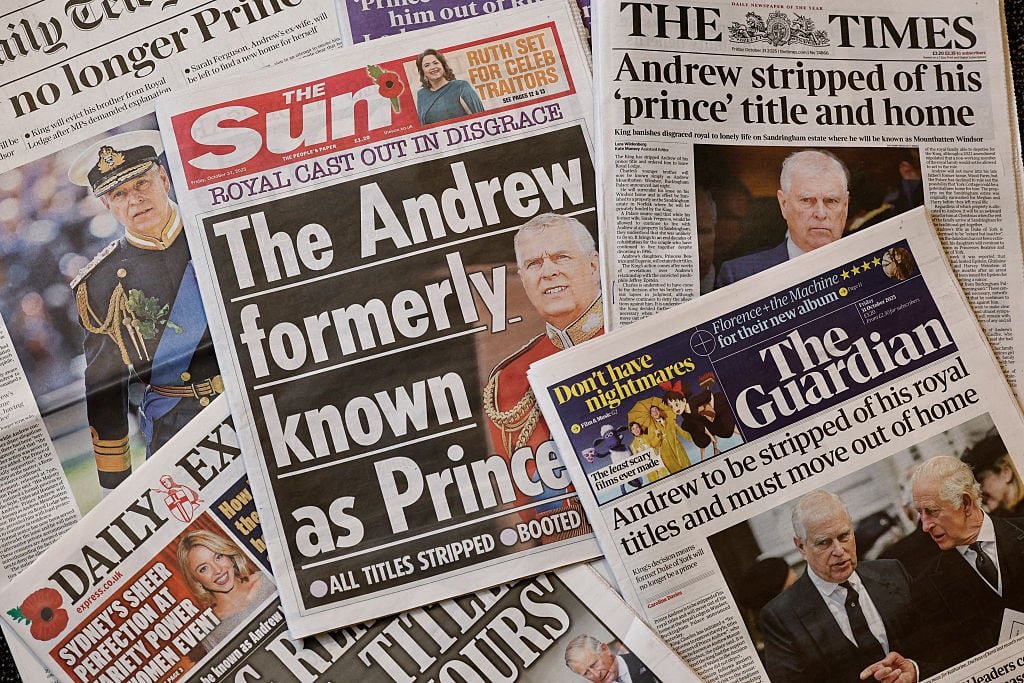
In an unprecedented move, Buckingham Palace announced on Thursday that King Charles has initiated the formal process to remove his younger brother’s prince title.
Andrew, aged 65, is also being ousted from the 30-room mansion he rents from the Crown Estate near Windsor Castle and will be relocated to one of the King’s private estates due to the scandal and controversy linked to his association with convicted sex offender Jeffrey Epstein.
This situation had escalated into a crisis for the Royal Family. The way Charles has dealt with it, especially in Thursday’s statement concerning Andrew’s titles and accommodation, may indicate the type of monarchy the King aims to establish.
Justin Vovk, a royal historian and member of the advisory board of the Institute for the Study of the Crown in Canada, described this as one of the most significant events for the monarchy in the 21st century. He emphasized that it reflects the King’s desire for modernization and adaptation to changing circumstances.
Following his disastrous BBC interview in 2019 regarding his association with Epstein, Andrew had withdrawn from official royal duties. He also recently settled a lawsuit in which he was accused of sexually assaulting Virginia Giuffre, a claim he continues to deny.
Recent excerpts from a posthumous book by Giuffre accused Andrew of behaving as if he believed having sex with her was his birthright.
Additional reports surfaced revealing an email sent by Andrew to Epstein in 2011 saying, “we are in this together,” after a photo of Andrew with a teenage Giuffre was published.
This situation has been described as the first genuine royal crisis of King Charles’s reign by Craig Prescott, a constitutional expert and law lecturer at Royal Holloway, University of London. He highlighted this as a significant challenge for the monarchy.
Parliamentarians in the UK had started questioning Andrew’s accommodation at Royal Lodge. Charles faced heckling from a protester this week regarding Andrew’s connection with Epstein, although the protester was met with vocal support for the King.
The recent actions by the palace may be aimed at aligning with broader public and parliamentary sentiment.
“The statement from the King was clear, especially when saying, ‘these censures are deemed necessary, notwithstanding the fact that [Andrew] continues to deny the allegations against him,’” Prescott said.
“It’s clearly distancing Andrew from the rest of the monarchy, which is reinforced by moving him to Sandringham. This move has put