

A researcher is investigating the effects of an invasive insect and the chemicals used to eradicate it on the species inhabiting old hemlock forests.
The hemlock woolly adelgid (HWA) has been causing significant damage to forests in southwestern Nova Scotia for nearly ten years. In efforts to curb its spread, various stakeholders including Parks Canada, the provincial government, local groups, and private landowners have resorted to using insecticides, specifically imidacloprid and dinotefuran.
Mathilde Christjansen, a master’s student at Mount Allison University in Sackville, New Brunswick, noted that there is limited knowledge regarding the impacts of the woolly adelgid and the insecticides on other species.
“[Imidacloprid] is designed to target insect nervous systems, but it can also affect the nervous systems of other animals,” she explained. “It has been detected in the brains of various animals such as fish and tadpoles.”
Instead of examining all species across various hemlock forests individually, Christjansen mentioned that the research team is focusing on a single small amphibian to provide insight into the ecosystem.
“The eastern red-backed salamander serves as an excellent bioindicator because it is sensitive to both environmental changes and pollutants,” she said. “Therefore, any changes in our eastern red-backed salamanders could indicate the overall health of the forest.”
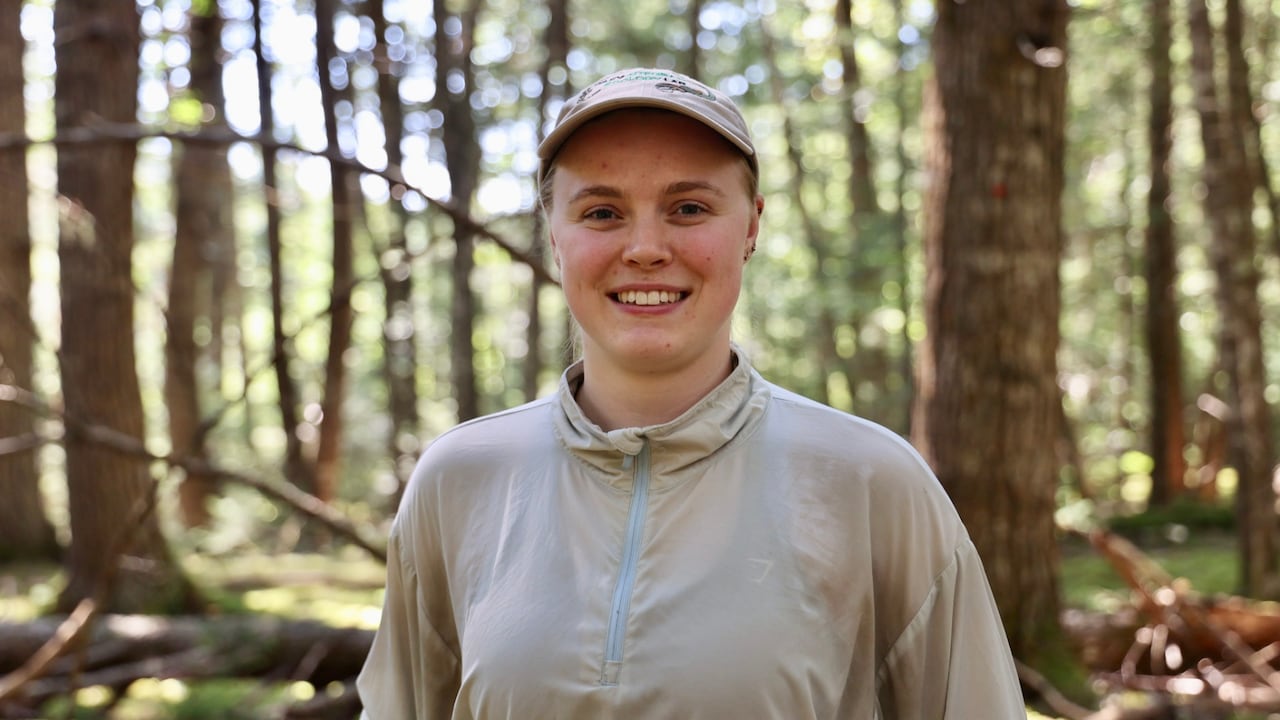
Mathilde Christjansen, a master’s student at Mount Allison University in Sackville, N.B., is leading this project. (Jeorge Sadi/CBC)
During the research, scientists installed coverboards in the forests last year. These coverboards provide shelter for salamanders, allowing researchers to periodically survey them to count the salamanders residing beneath, while also measuring and tagging them.
The team is examining some forests that are being treated for HWA with the insecticides, while others are left untreated.
Additionally, they conducted behavioral assessments on the salamanders they captured, such as gently prodding them to observe their reactions to potential threats and flipping them to see how quickly they could right themselves.
“If the salamanders are not thriving—say if their populations are dwindling, they exhibit health problems, or they are smaller than those found in untreated areas or even other treated forests—that could indicate whether other components of the ecosystem are also being impacted,” Christjansen stated.
Julia Riley, an associate professor at Mount Allison University and a Canada Research Chair in integrative wildlife ecology, noted that salamanders are significant indicators of forest health due to their responsiveness to environmental changes and their abundance.
“They are highly prevalent and constitute a substantial biomass in our forests. In fact, in woodlands across Eastern Canada, the biomass of eastern red-backed salamanders often surpasses that of deer,” she remarked. “Imagine all the deer in the forest grouped together, and then consider that there are more salamanders than that.”
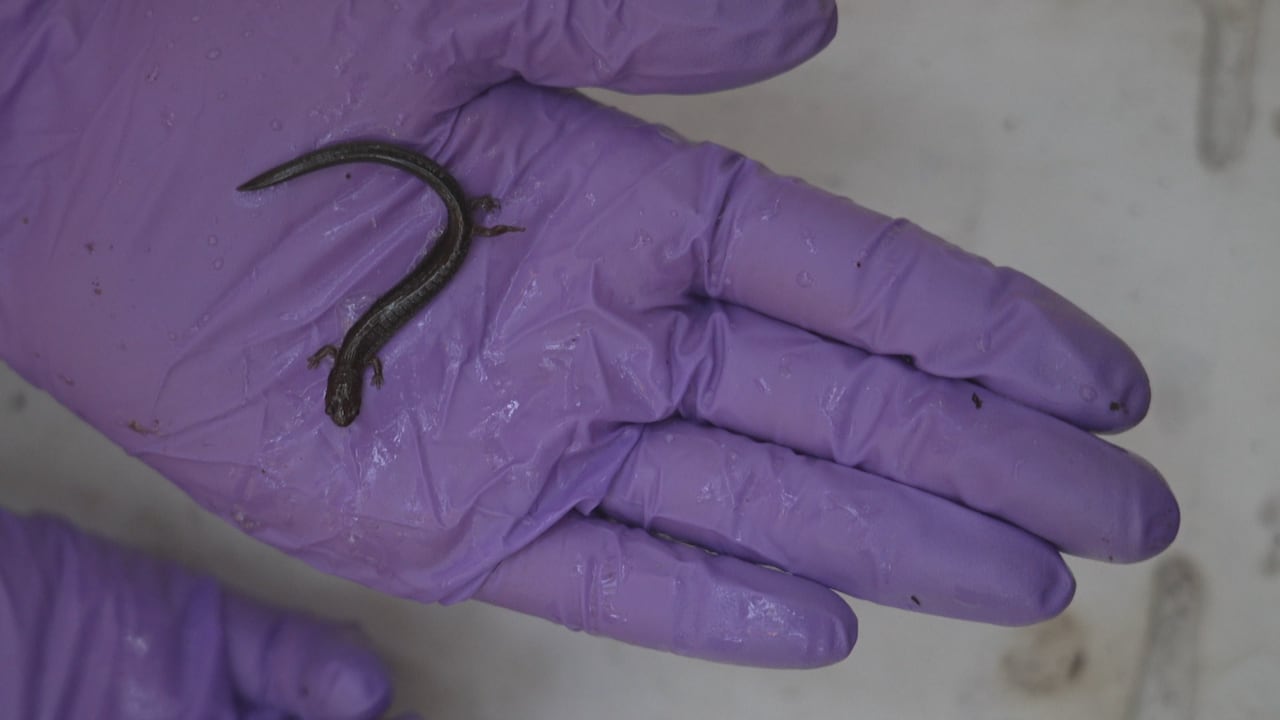
In one of the tests, the researcher would carefully place the salamander on the palm of their hand, and then put their other open palm on top. Then, the person would flip the salamander using both hands. This was done to see how fast the salamander would turn back on its feet. (Jeorge Sadi/CBC)
The research also examines how the decline of hemlocks affects the salamanders.
Chris Edge, another supervisor and a scientist with the Canadian Forest Service, explained that when hemlock trees die due to HWA, they also eliminate the conditions that make those forests suitable habitats.
“[Hemlocks] create dense canopies that significantly reduce sunlight reaching the forest floor, resulting in cool and moist microclimates,” he elaborated. “If we lose these unique ecosystems, it is unlikely they will be recreated.”
Salamanders possess very delicate skin that requires significant moisture. Consequently, if the forest becomes drier due to reduced foliage shielding the soil from sunlight, it could adversely affect salamander populations and their behavior.
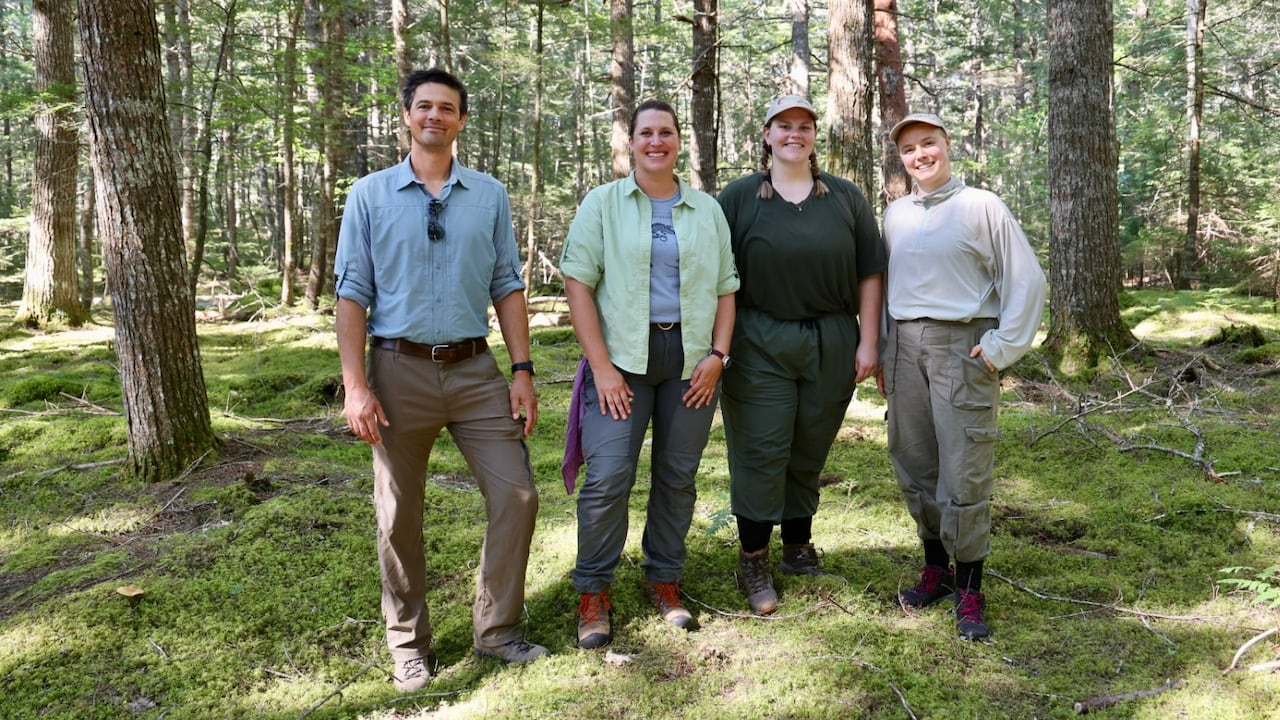
The research team examining the effects of HWA and insecticides, from left to right: Chris Edge, Julia Riley, Emily Doherty, and Mathilde Christjansen. (Jeorge Sadi)
Edge mentioned that the project is being carried out in partnership with Mount Allison University, the Canadian Forest Service, Acadia University, Environment and Climate Change Canada, and the University of Saskatchewan.
This initiative is part of a larger study focused on assessing forest health in Eastern Canada.
As for Christjansen, she indicated that her research will extend until sometime next year.
After months of data collection during the summer, she will analyze the gathered information and field videos.
MORE TOP STORIES
-
Truro family pushes back on proposed development next door
-
Gaelic College language course in Mabou not being offered in 2026
-
36 people banned from N.S. Legislature for protest over budget cuts
-
Annapolis Valley man faces attempted murder charge
-
Man arrested after allegedly threatening U.S. consulate in Halifax