
The year 2026 has brought a series of unexpected events, including the current concern over the phenomenon of trees exploding due to extreme cold weather conditions.
A significant portion of Canada and the northern United States is experiencing a severe cold snap, with temperatures dropping below –20 degrees Celsius, reaching as low as –40 degrees Celsius with wind chill in some regions.
This deep freeze is the result of a disruption in the polar vortex, pushing Arctic air southward into the U.S., affecting numerous states including North and South Dakota, Michigan, and Minnesota.
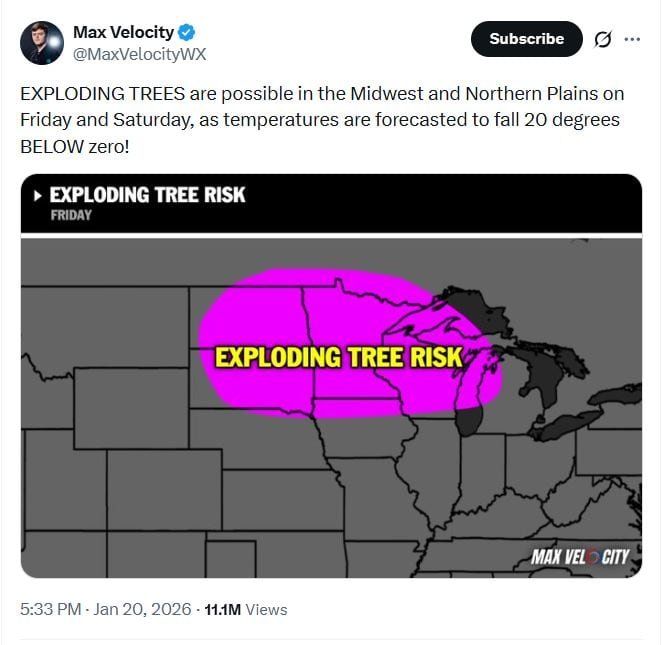
While there were claims circulating on social media about the possibility of trees exploding in the extreme cold, officials have clarified that the risk is not as high as suggested.
The frigid conditions pose a serious threat to public safety and are expected to contribute to a widespread and potentially hazardous winter storm affecting nearly 30 states from Friday to Monday, although the risk of trees exploding is minimal.
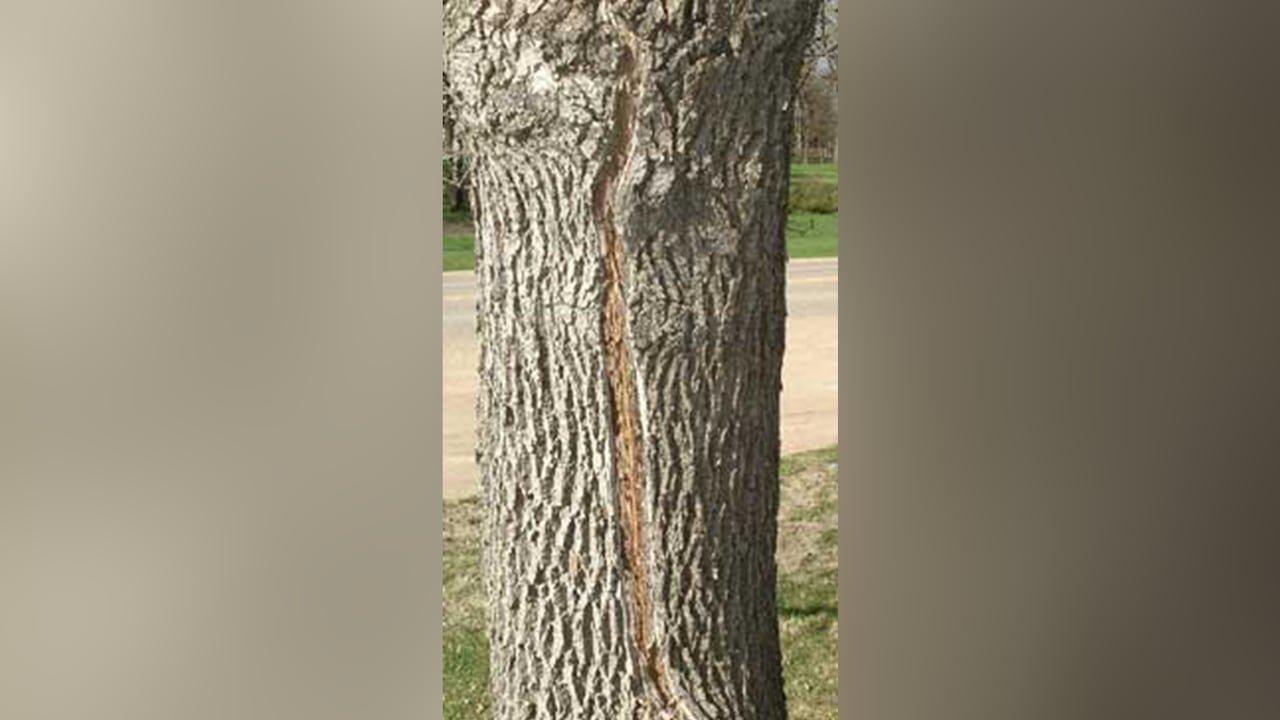
Experts explain that when temperatures drop suddenly, it can lead to frost cracks in trees, particularly in thin-barked species commonly found in the Prairies.
These cracks, which can be loud and resemble an explosion, occur when water and sap inside the tree freeze rapidly, causing internal pressure that results in splits and potential branch breakage.
While the cracks themselves do not harm the tree and usually heal during warmer weather, repeated cracking and healing may leave lasting scars or “frost ribs” on the trunk.
Hardwood trees, especially those that lose their leaves in winter or are overly pruned, are more susceptible to frost cracks, while native species have adapted to withstand extreme cold conditions.
Aside from trees, other phenomena such as frost quakes and thundersnow can also occur in severe winter weather, causing loud booms and tremors akin to earthquakes.
Overall, while the risk of trees exploding due to extreme cold is minimal, the sudden drop in temperatures can lead to various natural phenomena that require vigilance and awareness during winter months.