


Upon learning that she would be honored with Canada’s most esteemed scientific accolade, Linda Nazar was taken aback.
“I honestly felt both humbled and inspired,” the chemist from the University of Waterloo shared with Quirks & Quarks. “It’s a tremendous honor, and I am thrilled and truly grateful to receive this. Frankly, I was surprised.”
However, her award may not astonish those familiar with her impressive achievements.
Throughout her career, Nazar has amassed numerous accolades. She is a fellow of the Royal Society of Canada, the Royal Society in the U.K., and in 2015, she was appointed an Officer of the Order of Canada for her significant contributions to battery research.
On November 4, she will add yet another accolade to her collection: the $1-million Gerhard Herzberg Canada Gold Medal, recognized as the highest honor from the Natural Sciences and Engineering Research Council of Canada (NSERC).
This medal was one of 26 awards disclosed by the federal agency on Thursday, highlighting Nazar’s groundbreaking work in developing advanced batteries, with innovations that have propelled the creation of safer, more efficient batteries for electric vehicles, energy storage solutions for power grids, and more.
Presented each year, the medal honors researchers “whose work has made a transformative impact in their field,” as stated by NSERC.
“Through visionary leadership, collaboration with industry, and mentorship, Dr. Linda Nazar has established a globally significant research enterprise at the intersection of chemistry, materials science, and engineering,” NSERC President Professor Alejandro Adem remarked in the statement. “We celebrate her exceptional contributions and the profound impact she continues to have within the scientific community.”
According to her peers, her contributions have addressed one of the major challenges in the shift towards renewable energy: creating batteries that can store greater amounts of energy, have extended lifespans, are cost-effective, and operate safely.
Michael Pope, an associate professor at the University of Waterloo who co-leads the Ontario Battery and Electrochemistry Research Centre with Nazar, stated that her innovative research and “pioneering discoveries have enhanced our essential knowledge of battery chemistry.”
“[Her discoveries have] led to the creation of entirely new battery materials and technologies,” Pope noted in a statement to CBC. “Having collaborated closely with Linda, I have seen her remarkable enthusiasm for science, steadfast commitment to exploration, and authentic passion for research, making this recognition incredibly well-deserved.”
The Journey of Nazar
Nazar’s entry into battery research was not part of a grand design. In fact, she describes it as starting with a side project on Friday afternoons.
After completing her bachelor’s degree in chemistry at the University of British Columbia in 1978, followed by a PhD from the University of Toronto six years later, Nazar pursued a postdoctoral fellowship at Exxon Research Labs in Annandale, N.J.
During that time, she notes that the lab was among the pioneers in developing rechargeable lithium-ion batteries. As a side endeavor, she would venture into the lab every Friday to conduct battery experiments.
“It was just a fantastic chance to enjoy some fun on a Friday afternoon,” she recalled.
That side project would later ignite a career at the forefront of battery technology.
By the early 2000s, Nazar’s research was advancing the understanding of lithium iron phosphate — a material that has become widely utilized in rechargeable batteries, including those for electric vehicles and laptops.
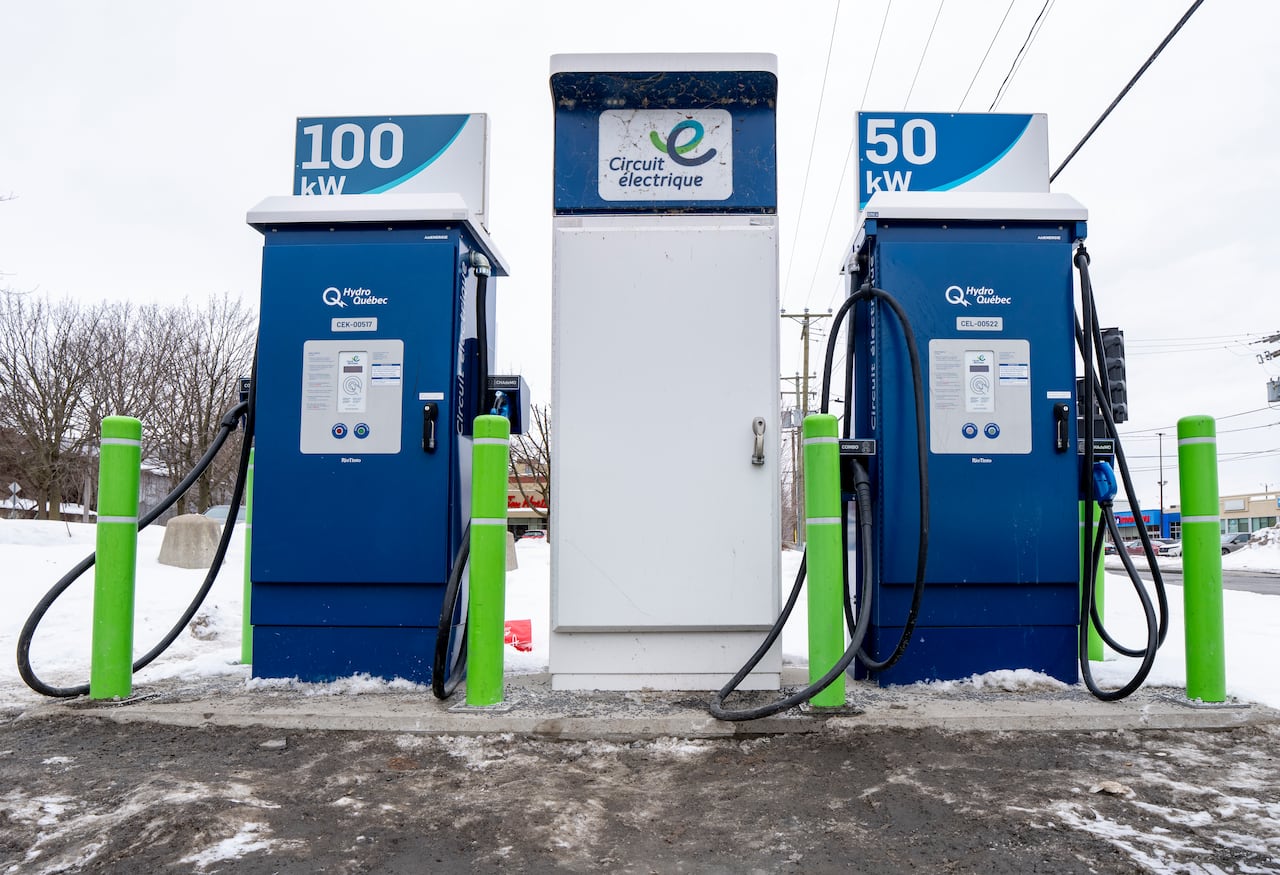
An EV charging station is seen in Montreal on Friday, Feb. 20. Nazar’s research has contributed to developments that could one day allow electric cars to travel farther on a single charge. (Christinne Muschi/The Canadian Press)
As noted by Ontario’s Universities, Nazar’s work has played a role in advancements that may eventually enable electric vehicles to cover greater distances on a single charge.
Ultimately, Nazar expresses that her greatest enthusiasm lies not just in the science, but in its potential implications.
She emphasizes that the long-term benefits of her research for the environment — and for humanity as a whole — is what keeps her driven.
“Charging electric vehicles using renewable sources and thereby combating climate change is… extremely significant, extremely significant,” she stated.