

The leader of Canada’s military space division has stated that the nation “should definitely be” worried about Russia’s possible capabilities, especially in light of rising global concerns about the Kremlin’s intentions to place nuclear weapons aimed at satellites.
Brig.-Gen. Christopher Horner, Commander of 3 Canadian Space Division, remarked, “That would be catastrophic,” during a conversation with CBC’s The House.
Horner explained to host Catherine Cullen that if Russia were to unleash such a capability and detonate it, “everything we rely on for communication or GPS would be obliterated.”
This warning from Horner coincides with rising anxiety among global leaders, including NATO Secretary General Mark Rutte, about the possibility of Russia employing nuclear weapons against satellites.
In December, Rutte stated to the German publication Welt am Sonntag that such an action by Russia would breach the 1967 Outer Space Treaty, which forbids the placement of weapons of mass destruction in space.
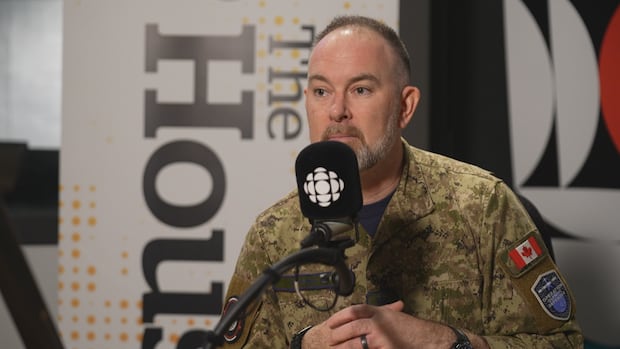
Brig.-Gen. Christopher Horner, Commander of 3 Canadian Space Division, emphasizes that Canada ‘should definitely be’ concerned about Russia’s potential capabilities amid global leaders’ worries regarding the Kremlin’s plans to deploy nuclear weapons in space.
Two years ago, tensions flared at the UN when U.S. and Russian representatives clashed after Russia rejected a U.S.-proposed resolution aimed at preventing an arms race in outer space.
At that time, Russia’s UN Ambassador Vassily Nebenzia dismissed the resolution as “a joke,” while the then deputy U.S. ambassador Robert Wood expressed that Russia’s opposition raised suspicions about their intentions.
Russian President Vladimir Putin also commented on the situation, asserting that his nation has “always been firmly against, and remains opposed to, the deployment of nuclear weapons in space.”
-
White House confirms reports of Russia’s ‘troubling’ anti-satellite weapon capability
-
U.S. briefs Canada, other allies about Russian nuclear threat
Horner noted that the magnitude of this potential threat has prompted significant concern in recent years.
Regarding Canada, he stated that the country will “collaborate as a middle power with our global partners to ensure such scenarios do not materialize and to exert diplomatic pressure where necessary to address these issues.”
“From a military standpoint, I advise that we should intensify our efforts to prevent the placement of nuclear weapons in space, as that would have disastrous implications for numerous reasons,” he added.
‘Sovereign space launch capability’
The 2025 federal budget allocates $182.6 million over a three-year period for the Department of National Defence to develop a “sovereign space launch capability,” enabling Canada to launch its own commercial and military satellites from domestic territory.
Several initiatives are already in progress in the quest to establish Canada’s first commercial spaceport. Horner stated that this capability is essential to “ensure Canada has reliable access to space” and could yield additional advantages.
“The space economy is expanding rapidly, and from an economic growth perspective, it provides us access to a market we’ve previously been excluded from,” Horner remarked.
“However, I also see, from a military viewpoint, the difficulties posed by the limited number of launch providers available globally.”
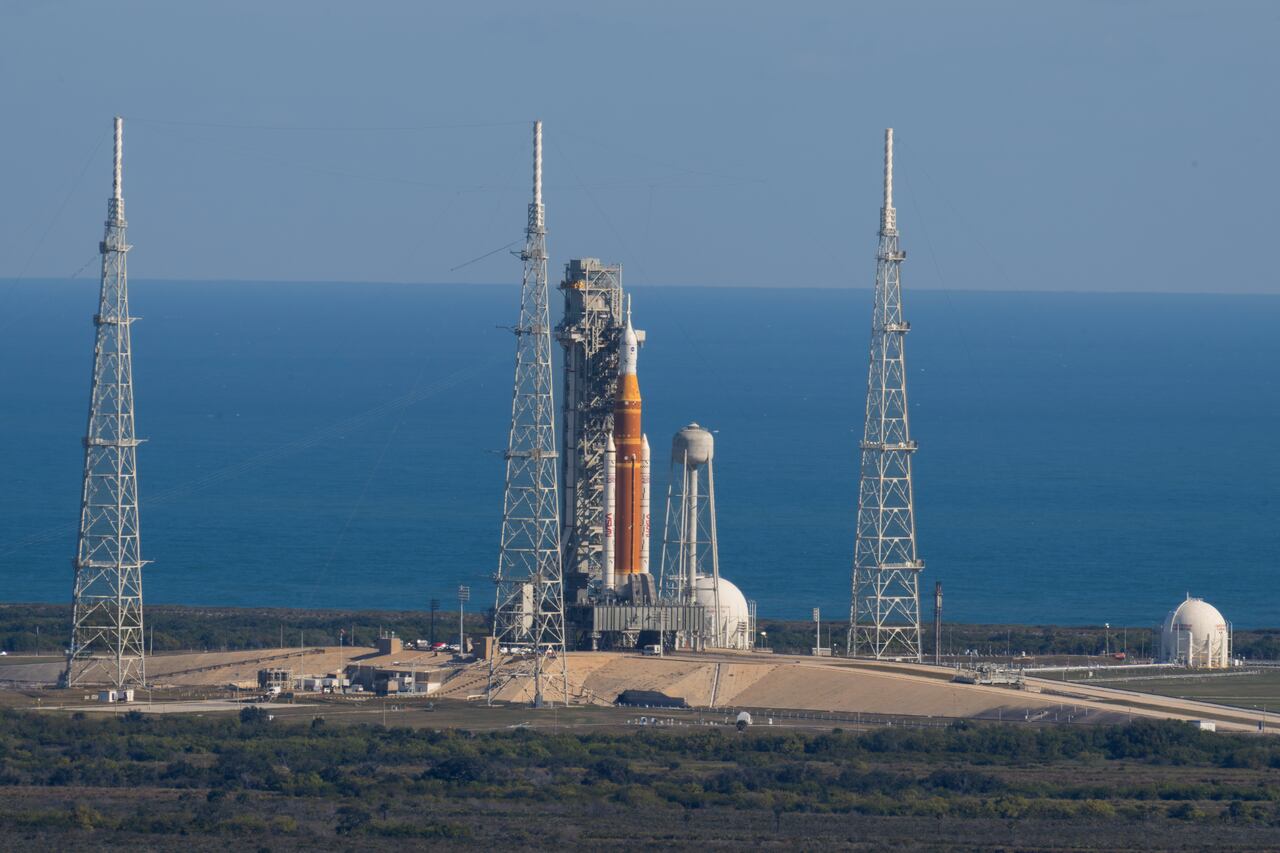
Last month, NASA’s Kennedy Space Center in Florida was the site for significant developments. Canada aims to enhance its ‘sovereign’ launch capabilities, according to Horner. (Jim Ross/NASA/The Associated Press)
Horner cautioned that a limited number of providers combined with an increasing demand for launches could lead to a scenario where only those with substantial financial resources could secure timely satellite launches, potentially leaving Canada disadvantaged without a domestic option.
“This could mean higher costs for Canadians as we seek to have SpaceX, Blue Origin, or Rocket Lab handle our launches,” he stated.
While Canada is working towards establishing a spaceport, Horner pointed out other ongoing initiatives within the Canadian aerospace industry.
“We have remarkable companies capable of designing, creating, and building satellites in Montreal, Toronto, and Ottawa — there is exceptional intellectual capital and resources in this nation that are globally competitive,” Horner noted, stressing “the sovereignty we can achieve as a nation by completing the economic cycle or chain in space.”