

On Tuesday, Moderna revealed that the U.S. Food and Drug Administration has declined to review its request for a new flu vaccine utilizing mRNA technology, which was awarded the Nobel Prize.
This development highlights the FDA’s increased examination of vaccines under Health Secretary Robert F. Kennedy Jr., particularly those employing mRNA technology, which he has criticized both prior to and after taking office as the nation’s chief health official.
Moderna received a “refusal-to-file” letter from the FDA, expressing concerns over the methodology used in a clinical trial involving 40,000 participants that compared its new vaccine to a standard flu shot currently available. The results indicated that the new vaccine was slightly more effective for adults aged 50 and over compared to the standard shot.
Dr. Vinay Prasad, the FDA’s vaccine director, indicated in his correspondence that the agency did not believe the application presented an “adequate and well-controlled trial,” as it did not compare the new vaccine to “the best-available standard of care in the United States at the time of the study.” Prasad referenced advice from FDA officials provided to Moderna in 2024, during the Biden administration, which the company did not follow.
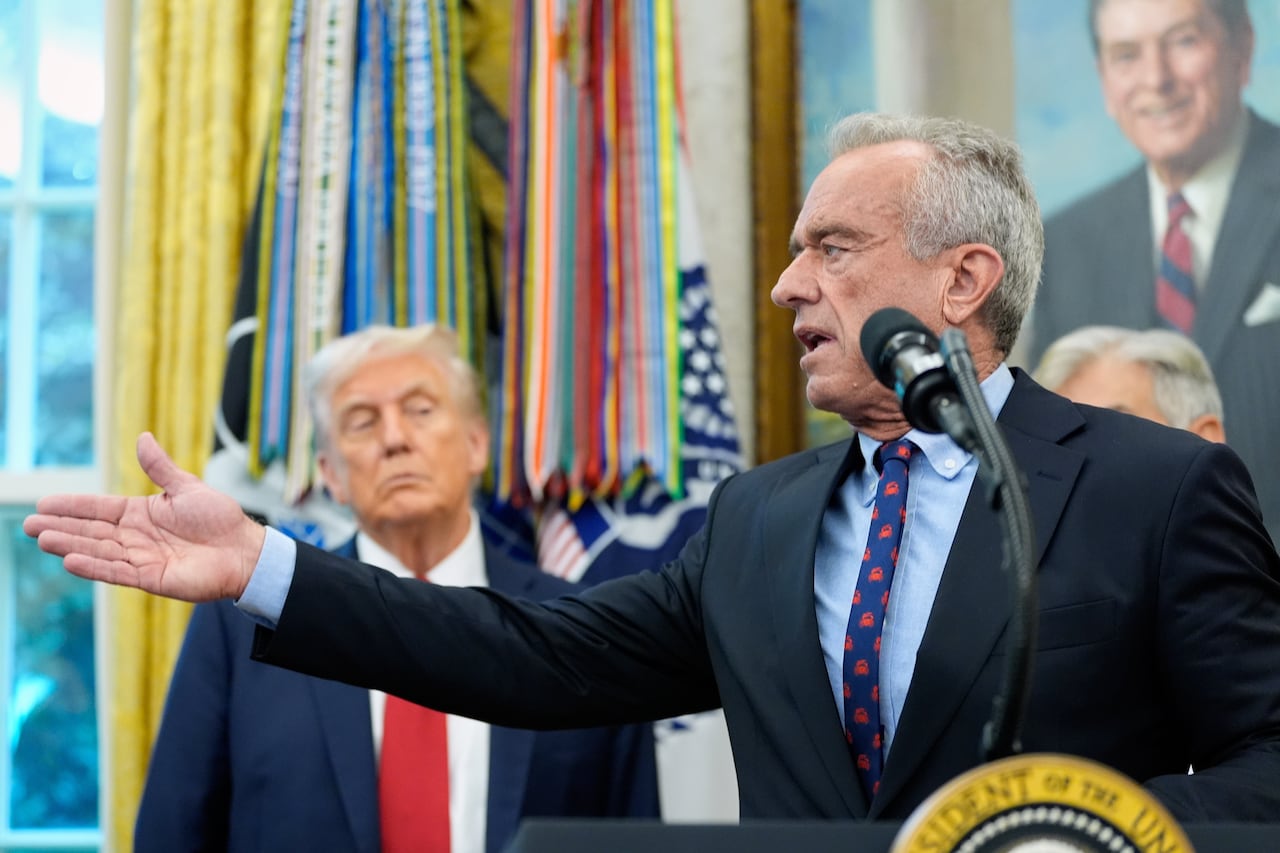
Secretary of Health and Human Services Robert F. Kennedy Jr. speaks in the Oval Office of the White House, Tuesday, Sept. 30, 2025, in Washington, as President Donald Trump looks on. (Alex Brandon/Associated Press)
Moderna stated that the feedback from the FDA indicated that it was permissible to use the chosen standard-dose flu shot, but that another brand specifically designed for seniors was preferred for participants aged 65 and older in the trial. Nevertheless, Moderna noted that the FDA allowed the study to continue as originally planned.
The company further mentioned that it had provided the FDA with additional information from a separate trial that compared the new vaccine with a licensed high-dose shot intended for seniors.
“The FDA did not identify any safety or efficacy concerns with our product,” stated Moderna CEO Stephane Bancel.
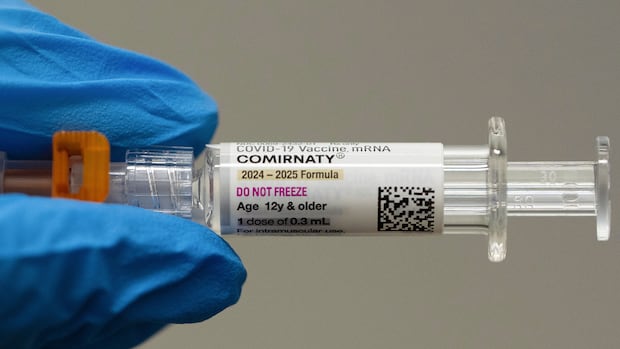
U.S. Health Secretary Robert F. Kennedy Jr. has cancelled $500 million in funding for the development of mNRA vaccine technology. For The National, CBC’s Heather Hiscox asks infectious disease specialist Dr. Allison McGeer and health researcher Bradley Wouters to break down what kind of impact this could have on fighting disease in Canada and around the world.
It is uncommon for the FDA to reject an application, especially for a new vaccine, which usually involves extensive discussions between the companies and FDA staff over several months or even years.
Moderna has sought an urgent meeting with the FDA and has also applied for approval of the vaccine in Europe, Canada, and Australia.
Over the past year, officials under Kennedy have revised recommendations regarding COVID-19 vaccines, introduced additional warnings for the two primary COVID vaccines made with mRNA technology, and removed critics of the administration’s stance from an FDA advisory committee.
-
RFK Jr.’s vaccine advisers change guidance around COVID shots, MMRV vaccines for young kids
-
Breaking down how a massive U.S. funding cut could impact future mRNA vaccines
Last year, Kennedy announced that his department would terminate over $500 million in contracts and funding aimed at the development of mRNA vaccines.
For decades, the FDA has permitted vaccine manufacturers to swiftly update their annual flu vaccines to address the most recent strains by demonstrating an immune response in patients. This is a much more efficient method than conducting extensive long-term studies to track flu incidence and patient outcomes.
In an internal memo from last year, Prasad stated that this expedited process would no longer be allowed, prompting more than a dozen former FDA commissioners to write an editorial denouncing these comments.