

The stinger of a western honey bee (Apis mellifera) is a tool used as a last line of defense, designed to penetrate and inject venom into flesh, often leading to the death of the bee.
New research recently published in the Proceedings of the National Academy of Sciences sheds light on the effectiveness of this defense mechanism.
Fiorella Ramirez Esquivel, the lead author and a postdoctoral researcher at Macquarie University in Australia, mentioned that the ability to capture these actions on film was made possible by modern camera technology.
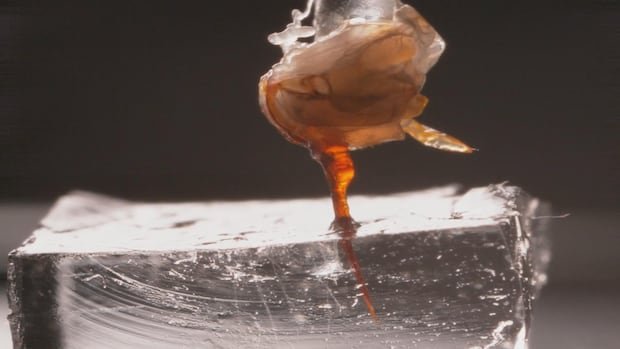
Researchers recorded how the stinger of a western honey bee penetrates a surface while injecting venom.
To capture the rapid movements of bee stings, Ramirez Esquivel and her team utilized high-speed cameras capable of recording hundreds of frames per second. The transparent nature of the venom sac and stinger allowed for enhanced visibility under intense lighting to highlight the internal structures.
Using live honey bees in their experiments, the researchers extracted and immediately killed the bees after removing their stingers. Due to the stinger’s limited active time of about two minutes post-separation from the bee’s body, Ramirez Esquivel emphasized the need for swift actions.
“I am extracting the stinger from the bee and then inserting it into this artificial [skin substitute], with only about four millimeters of space to ensure precise placement,” she explained to CBC News from Sydney.
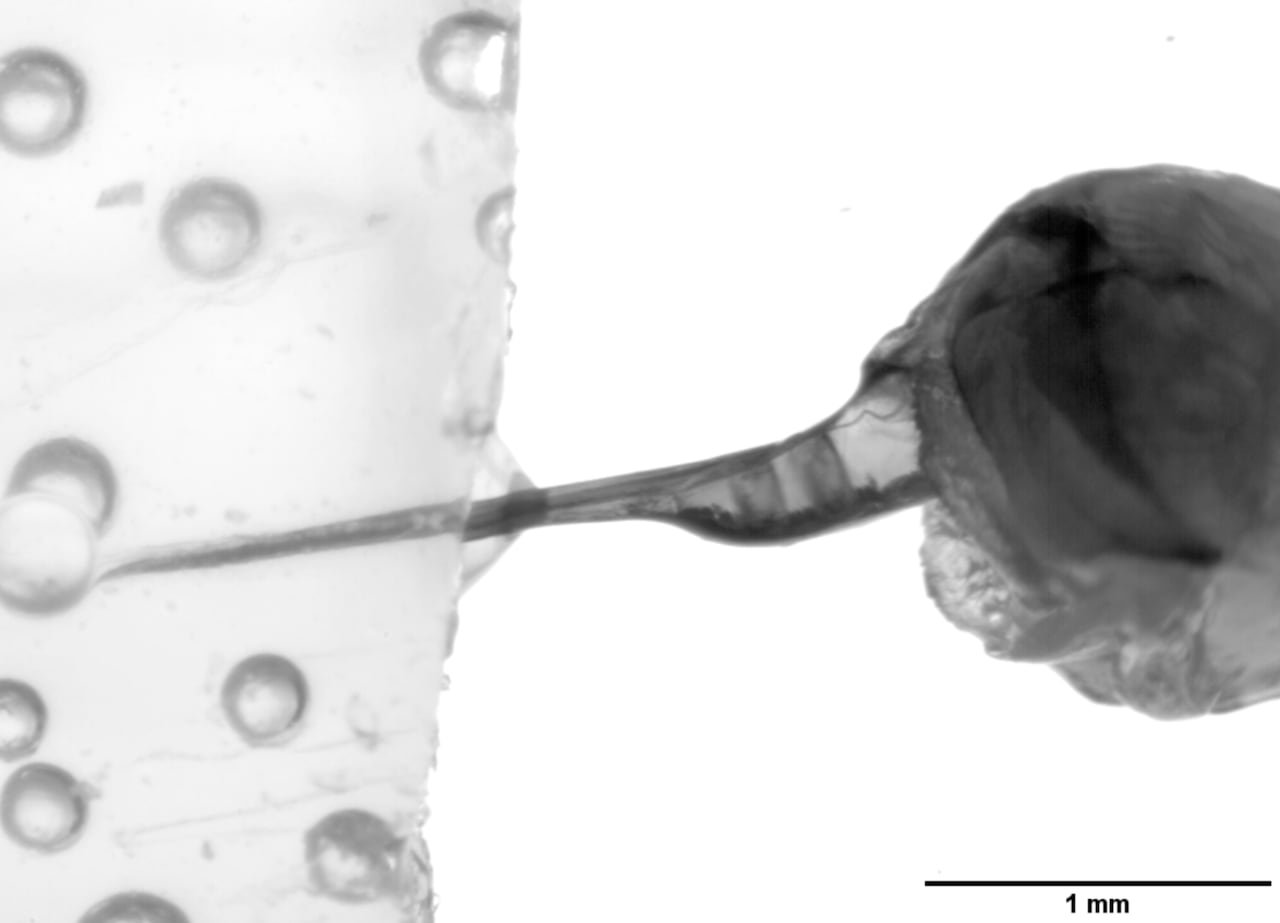
At 100 frames per second, two distinct pieces in the middle chamber between the long needle and the large venom sac are visible. These are valves that engage in a unique movement pattern. (Ramirez Esquivel et al. 2026)
<h2 class="h2-WTv89 html