

Katie MacIntosh had longed to travel to Antarctica all her life, but her first experience on the continent didn’t go according to plan.
She opted to snorkel from her zodiac to the shore but soon discovered her wetsuit was leaking.
“There was a mix of physical discomfort, but also the internal emotion of setting foot on a continent so few will ever step on… especially women, women in the science field. Very few have been there. So, it was a very emotional day for me,” she recounted with a chuckle.
This was just one of the many moments encountered by three geoscientists from Nova Scotia during their month-long research mission to Antarctica.
A group of two dozen women experts from various countries, organized by Sea Women Expeditions, embarked on the journey to investigate the impacts of climate change.
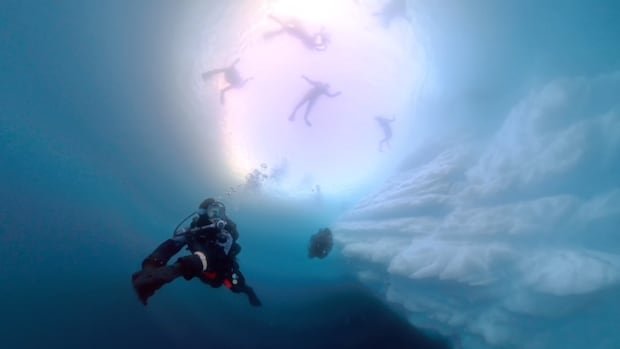
Three geoscientists from Nova Scotia have returned after a month-long Antarctic expedition to study climate change effects. Now back, they aim to share their experiences with a wide audience. Carolyn Ray from CBC reports.
By chance, three out of the four leaders in underwater robotics were from Nova Scotia. The women see this as a testament to the province’s significant contributions to ocean science.
“For explorers and those in ocean sciences, it’s a dream come true,” mentioned MacIntosh, originally from Antigonish but working in London, England.
As a marine geomatics engineer responsible for planning and technology on the trip, she expressed, “Being part of an all-female team and conducting successful scientific research in such a remote and challenging environment, deploying equipment where it’s rarely seen, was truly special for me.”
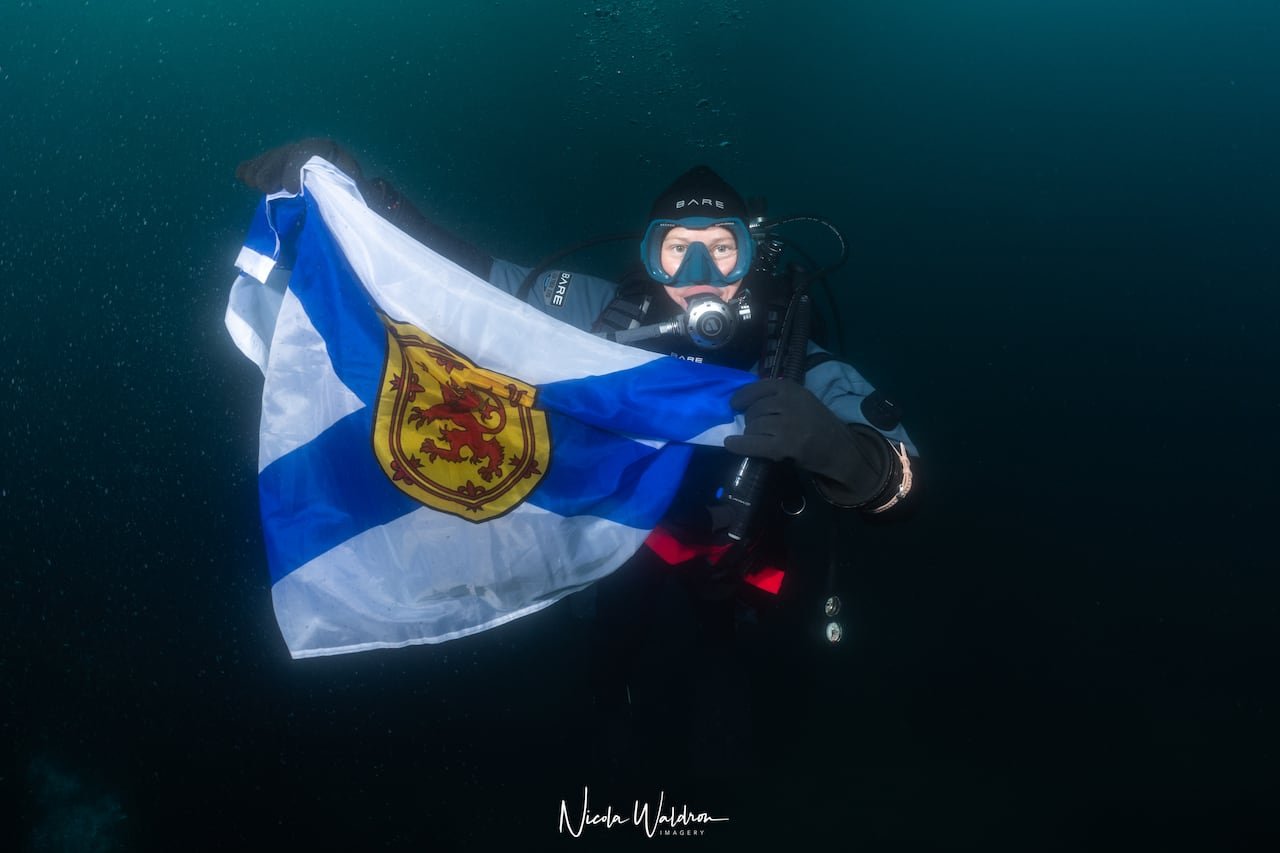
The team spent weeks scuba diving and snorkeling to collect underwater data.
While focusing on leopard seal behavior, whale bone testing, and glacier mapping, the scientists also aimed to represent their homeland by deploying robotic equipment from a zodiac while playing Maritime music through a speaker.
“We had a daily kitchen party on our zodiac, so we brought our Maritime spirit with us down south,” joked Heather Pearce, originating from Chester.
Working as a geoscientist consultant at WSP Canada, Pearce’s task involved scuba diving near glaciers to study benthic marine life — organisms living close to the seabed.
“The experience of descending slowly into the water after leaving the boat is something I’ll cherish forever,” she added.