

A woman from Prince George, B.C., has been sentenced to life imprisonment without the chance of parole for a decade following the fatal stabbing of another woman outside the courthouse on July 2, 2020.
Charlene Jane Alexander, aged 60, faced charges in connection with the July 2020 death of 26-year-old Jessie-Mae Hayward-Lines. Following the assault, Hayward-Lines was transported to the hospital but succumbed to her injuries the following morning.
Initially, Alexander was charged with first-degree murder, but she was found guilty of second-degree murder.
Justice Neena Sharma indicated that on the night of July 2, Hayward-Lines, who was experiencing homelessness at the time, was playing music from a speaker outside the courthouse.
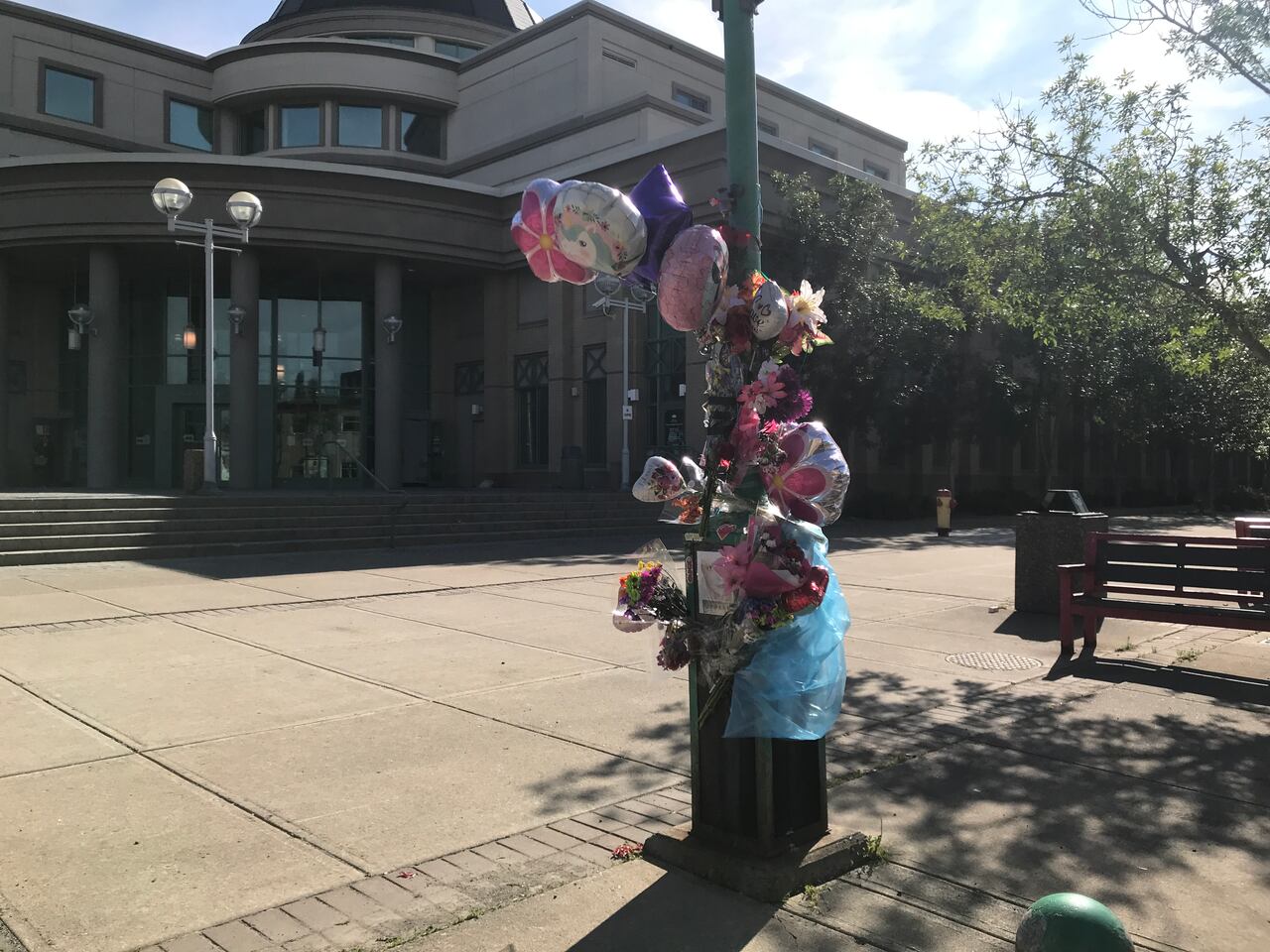
A memorial for Jessie Mae Hayward-Lines who was fatally stabbed outside the Prince George courthouse on July 2, 2020. (Betsy Trumpener/CBC)
Over the course of two hours, Alexander, who was also living without housing, confronted Hayward-Lines regarding the music.
She subsequently returned to her shelter, retrieved a knife, and returned to the courthouse steps where she stabbed Hayward-Lines three times.
Crown prosecutors argued for a parole ineligibility period of 12 to 15 years, while defense attorney Lisa Helps advocated for a 10-year period.
Justice Sharma noted that the victim impact statements provided by Hayward-Lines’ friends and family shared many recurring themes.
“Jessie-Mae was a beacon of light even during her most challenging moments. Her family meant everything to her. She enhanced the world simply by being in it,” she remarked.
“I am certain that no words can adequately convey the extent of your loss.”
Consideration of Gladue factors
Justice Sharma also took into account Gladue factors during the sentencing process, indicating they were both significant and substantial, particularly noting that Alexander attended Lejac Residential School, along with both her parents and siblings.
The Gladue process stems from a Supreme Court ruling in 1999 and aims to address the disproportionate incarceration rates of First Nations, Inuit, and Métis individuals.
It serves as a means to provide contextual information to judges regarding an Indigenous person’s background and the effects of colonialism on their lives.
According to Sharma, while attending the residential school, Alexander faced physical, emotional, and sexual abuse, and continued to suffer abuse from her own family.
“She was exposed to both violence and alcoholism from a young age,” the judge stated.
“At the time of the offense, she was battling substance abuse.”

Gladue reports provide insight into an Indigenous person’s background, their family’s history, and the history of their community to the courts, allowing for consideration of their unique circumstances and challenges.
Justice Sharma further stated that she did not concur with the Crown’s assertion that Alexander lacked sincerity in her expressions of remorse, referencing a pre-sentence report in which Alexander indicated she would regret her actions for the rest of her life.
The judge added that during her time in custody, Alexander has taken proactive measures to tackle her issues with alcoholism and anger.
“The sentence I am imposing does not ensure she will receive parole in 10 years; that decision lies with the parole board and Miss Alexander,” Sharma remarked.
The maximum sentence for second-degree murder is life imprisonment with no possibility of parole for 25 years.