

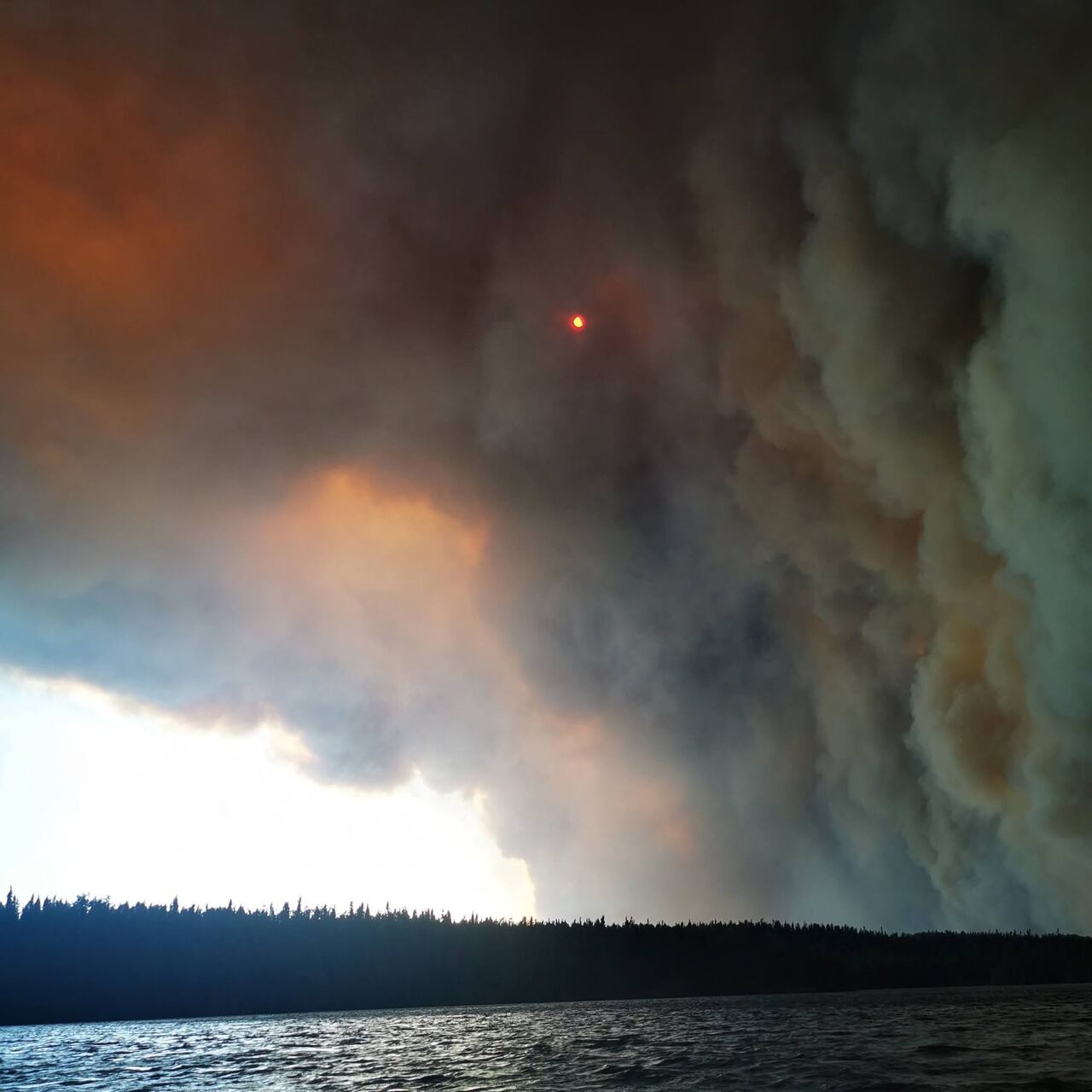
This summer’s wildfires have led to significant disruption in First Nation communities across northwestern Ontario, resulting in numerous evacuations and the complete destruction of the Namaygoosisagagun First Nation (also referred to as Collins First Nation) and Whitewater Lake First Nation.
The Sioux Lookout First Nations Health Authority (SLFNA) states that individuals traveling to Thunder Bay for medical services are also being affected, as hotels in the city are nearing capacity. Those requiring lodging include evacuees, emergency responders, and tourists visiting during the busy season.
Monica Hemeon, vice-president of regional services for SLFNHA, pointed out that there have been ongoing issues with transportation and accommodation for First Nations residents seeking healthcare services unavailable in their communities.
-
Here’s the latest on northwestern Ontario’s forest fires: Wednesday, Aug. 12
-
First Nation medical transportation program in Thunder Bay, Ont., axed over lack of funding
Hemeon further mentioned that there have been instances of medical transportation not being coordinated “in a timely manner,” and patients often remain uninformed about their appointments.
“Communities have reported between 60 and 150 missed appointments each month,” Hemeon stated.
Missing appointments ‘a big deal’
Hemeon highlighted that increased tourism in Thunder Bay, including visitors attending events like the Canadian Lakehead Exhibition last week, has contributed to the heightened demand for hotel accommodations, complicating the situation for SLFNHA members seeking places to stay.
“Many of our communities are remote and only accessible by air. Missing appointments is a significant issue…. People need to plan ahead, including travel arrangements and care,” she explained.
“We were already facing a crisis, and the fires have exacerbated the situation, revealing the inadequacy of hotel options in Thunder Bay. We face similar challenges in Winnipeg,” Hemeon added.
Last month, ISC acknowledged the accommodation difficulties caused by the wildfires in a communication to healthcare providers.
“If your medical appointment is not urgent, we kindly request that you reach out to your healthcare provider to explore the possibility of rescheduling,” the email stated. “It could take a few weeks for the situation to improve.”
CBC News reached out to ISC for their perspective on the accommodation issues.
“The wildfires in Northern Ontario have led to several evacuations, which may cause decreased hotel availability in certain regions,” the response indicated.
“We will persist in collaborating with clients and communities to facilitate urgent medical appointments. However, the limited availability of hotels could hinder our capacity to secure accommodations.”
Concerns about health outcomes
Hemeon remarked that such circumstances have a profound impact on health outcomes for individuals in northern regions, frequently delaying treatment or causing individuals to cancel or postpone appointments due to insufficient planning time or accommodation options.
“They already face significant barriers when it comes to accessing care and navigating the complexities involved in traveling from their community to see a specialist, for instance.
“Thus, when additional layers of missed appointments and difficulties in securing accommodations are added, it could ultimately affect someone’s health to a life-threatening extent.”