

Early predictions suggest the potential emergence of an exceptionally strong El Niño phenomenon, commonly referred to as a “super” El Niño, in the upcoming months. This event is likely to contribute to a rise in the global annual temperature and intensify extreme weather occurrences.
Various climate models are indicating the development of a robust El Niño starting around June or July, peaking in November. Some projections even suggest that ocean temperatures in a vital Pacific region could soar up to 2 degrees Celsius above the norm, with certain models forecasting even higher temperature anomalies.
El Niño is a component of the broader El Niño-Southern Oscillation (ENSO) system, influencing weather patterns worldwide. Warmer waters in the specific Pacific region known as Niño 3.4 trigger El Niño, whereas colder temperatures lead to La Niña, with a neutral phase also existing.
The U.S. National Oceanic and Atmospheric Administration (NOAA) has issued its monthly ENSO update, indicating an 82% likelihood of El Niño developing between May and July, with a 96% probability of continuation from December to February. However, uncertainties persist regarding the peak strength of this El Niño event.
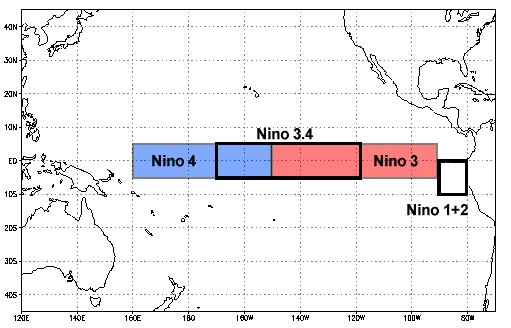
Under normal circumstances, trade winds move westward along the Pacific equator, transferring warm water from South America to Asia. This mechanism involves the upwelling of cold oceanic waters to replace the warm currents.
During El Niño occurrences, the trade winds weaken, disrupting this process. Current conditions indicate the formation of an impending El Niño event.
While the possibility of a potent or even ‘super’ El Niño is on the horizon, experts suggest minimal impacts on Canada during the summer. However, global repercussions are expected due to a strong El Niño event.
Canada typically experiences the most significant effects of El Niño during the winter. Eastern and Central Canada often witness milder winters, a trend anticipated with the impending El Niño event set to develop around June or July and peak near November or December.
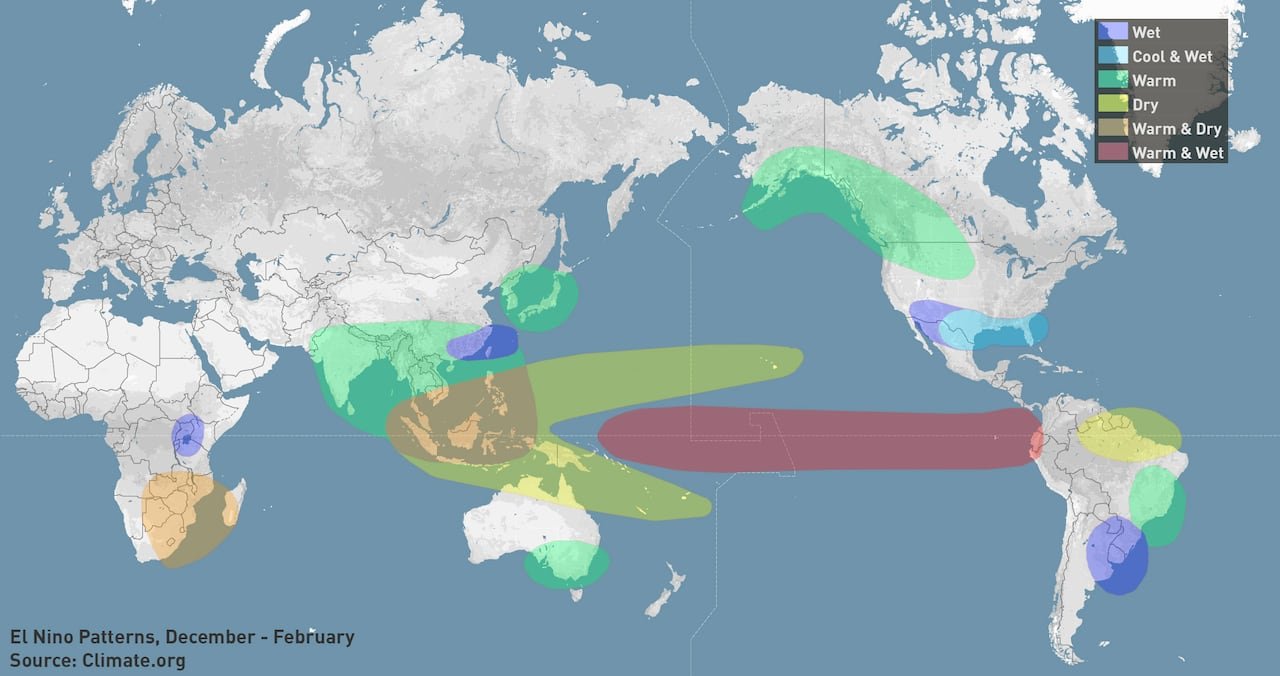
Not limited to Eastern Canada, the Western regions are also anticipated to encounter warmer conditions.
During the last strong El Niño in 2023-2024, Canada experienced its warmest winter on record, with a temperature anomaly of 1.5 degrees Celsius in the El Niño 3.4 region. Forecasts for the current El Niño event suggest a temperature anomaly closer to 2 degrees Celsius or higher.
The most recent ‘super’ El Niño in 2015-2016 recorded a temperature anomaly of 2.4 degrees Celsius. Potential impacts may be felt in 2027, although they are not directly attributed to El Niño.
Climate Change and El Niño
Continued release of fossil fuels into the atmosphere has led to a warming planet. The past 11 years have consecutively ranked as the warmest on record, including years with La Niña, typically associated with cooling effects.
The combination of ongoing