

This week, top diplomats from the G7 nations convened in the Niagara area to address various global crises. However, Canada’s Foreign Affairs Minister Anita Anand indicated that she did not raise the issue of stalled trade discussions between Canada and the United States.
During the summit on Wednesday, Anand held talks with U.S. Secretary of State Marco Rubio, where they covered topics such as Ukraine, the Middle East, Haiti, and Arctic sovereignty.
When questioned multiple times about whether she discussed Canada-U.S. trade with Rubio, Anand stated that it is under the jurisdiction of Trade Minister Dominic LeBlanc.
“Minister LeBlanc is diligently working on this matter every single day,” Anand informed reporters. “I am here to discuss the collaborative efforts of the G7 ministers.”
Last month, U.S. President Donald Trump halted trade discussions with Canada following an advertisement campaign sponsored by Ontario that featured former President Ronald Reagan criticizing tariffs.
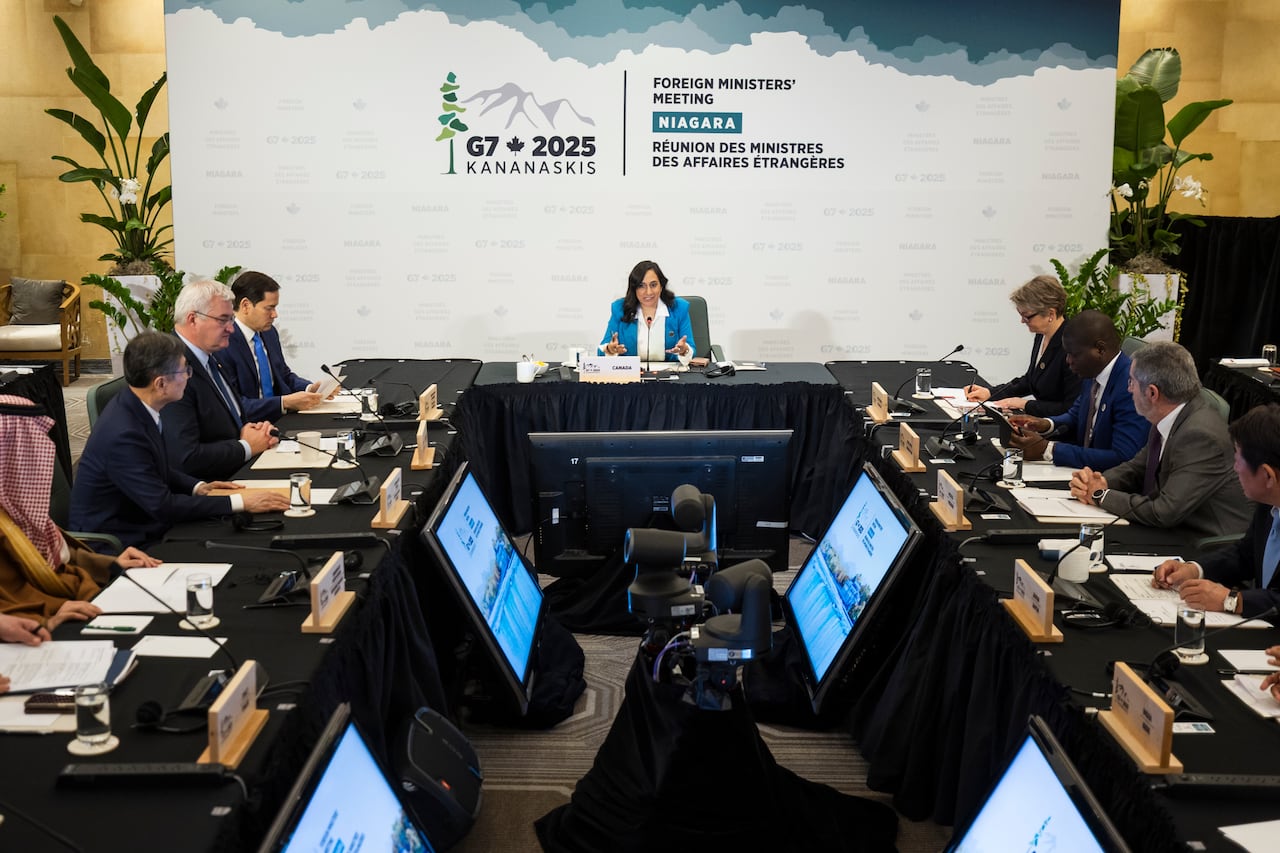
Foreign Affairs Minister Anita Anand leads a meeting on maritime security with foreign ministers during the G7 Foreign Ministers’ Meeting in Niagara-on-the-Lake, Ont., on Wednesday. (Nick Iwanyshyn/The Canadian Press)
Despite Prime Minister Mark Carney’s apology for the advertisement and a friendly encounter with Trump at a global leaders’ summit in South Korea, trade negotiations have yet to resume.
Anand concluded Canada’s G7 presidency by advocating for multilateralism and fostering new trade relationships as a response to Trump’s tariffs. She also extended invitations to Australia, Brazil, India, Mexico, Saudi Arabia, South Africa, and South Korea to participate.
However, U.S. military actions against vessels in the Caribbean overshadowed the two-day gathering in Niagara-on-the-Lake.
U.S. Secretary of War Pete Hegseth announced on Monday that six additional individuals had been killed in the most recent strike in international waters, raising the total death toll to 76. The Trump administration claims it is targeting drug traffickers but has not provided public evidence to support this assertion.
CNN reported on Tuesday that the United Kingdom had ceased sharing certain intelligence with the United States regarding suspected traffickers in the region, as it did not wish to be complicit and deemed the strikes illegal.
Later on Tuesday, Reuters reported that French Foreign Minister Jean-Noel Barrot, who attended the G7 meeting in Ontario, stated that the strikes contravene international law.
Anand mentioned that Canada continues to provide intelligence to the U.S. through Operation Caribbe to intercept drugs heading to North America but is not involved in the contentious strikes.
She noted that the United States “has made it clear that it is utilizing its own intelligence” and added that she did not discuss this matter with Rubio.
As the summit concluded, foreign ministers from Canada, France, Germany, Italy, Japan, the United Kingdom, the United States, and the European Union released a joint statement addressing various geopolitical challenges, including the fragile ceasefire in Gaza and security in the Indo-Pacific region. While maritime security was discussed, the U.S. strikes on vessels in international waters were not addressed.
The communique expressed strong support for Ukraine following renewed Russian attacks on the Ukrainian power grid and advances in southern areas of Ukraine.
“We remain committed to the principle that international borders must not be altered by force,” stated the joint declaration.
New sanctions on Russia
As the brutal war enters its fourth year, Russian attacks have led to widespread blackouts in Ukraine as winter approaches. Diplomatic efforts led by the U.S. to negotiate a ceasefire are currently at an impasse.
Rubio has consistently criticized Russian President Vladimir Putin, while Trump has maintained an inconsistent approach to the conflict.
The G7 leaders’ summit held in June in Alberta was intended to project unity on pressing global issues, but Trump departed early, citing the need to address tensions between Israel and Iran. Ultimately, no joint statement on Ukraine emerged from that meeting due to resistance from Trump’s team.
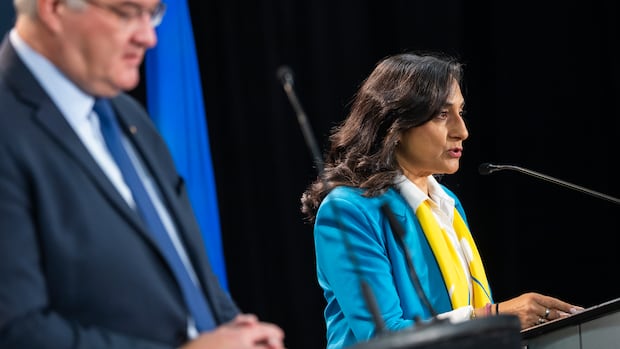
Foreign Affairs Minister Anita Anand announced a new package of sanctions against Russia targeting 13 individuals and 11 entities, including several involved in Russia’s drone program. Anand was speaking alongside her Ukrainian counterpart, Andrii Sybiha, from the G7 foreign ministers’ meeting in Niagara-on-the-Lake, Ont.
Last month, after extensive negotiations, Trump approved new sanctions aimed at Russia’s oil industry, which are set to take effect on November 21.
Earlier on Wednesday, Anand revealed that Canada is imposing sanctions on those responsible for Russia’s drone and cyber assaults on Ukraine.
“During our G7 presidency, Canada has prioritized maintaining and enhancing support for Ukraine whenever possible,” Anand stated.
The immediate sanctions will also target 100 vessels within Russia’s sanctions-evasive fleet and two Russian liquefied natural gas enterprises.
The sanctions encompass 13 individuals and 11 entities. A press release indicated that this action aligns with the G7’s efforts to increase economic pressure on Russia and is in coordination with similar measures taken by the United States, the European Union, and the United Kingdom.