

The Ontario Court of Appeal has determined that the online gaming platforms regulated by the province are permitted to enable players within Ontario to compete with individuals located outside of Canada.
This landmark legal judgment — which faced opposition from lottery and gaming organizations across nearly all other provinces — may potentially allow residents of Ontario to engage in peer-to-peer games, such as online poker and daily fantasy sports, against competitors situated outside Canadian borders.
In a decision released on the court’s website Wednesday afternoon, four judges supported the ruling, while one judge expressed dissent. Chief Justice Michael Tulloch stated that the court’s interpretation of the Criminal Code led to the conclusion that “a majority of the court has determined that online gaming and sports betting would remain legal” under the proposed framework for Ontario.
The implications of this ruling for the province’s short-term online gaming initiatives remain somewhat ambiguous. A spokesperson from the Ministry of the Attorney General indicated via email that they “cannot comment on a court matter that is still within the appeal period.”
There is a possibility of appealing this decision to the Supreme Court of Canada. The lottery and gaming agencies that opposed Ontario’s initiative — those overseeing gambling in British Columbia, Saskatchewan, Manitoba, and the four Atlantic provinces — expressed concerns in a court document regarding the potential for it to “further encourage illegal online gambling in their jurisdictions.”
Potential Appeal to Supreme Court, Attorney States
The group known as the Canadian Lottery Coalition stated in a message to CBC News on Wednesday that they felt “encouraged” by the court’s decision, which “acknowledged that players in our jurisdictions should not be allowed to engage in games or betting unless there is an agreement with our provinces.”
The statement further mentioned that the coalition’s members “will continue to analyze the court’s decision” and have no additional comments at this moment.
Gaming expert Don Bourgeois, an attorney at the Toronto-based firm Fogler, Rubinoff LLP, stated that he would not be surprised if the decision is taken to the Supreme Court of Canada for further review.
“I anticipate there will be an appeal — but there may be factors that suggest, ‘Let’s just move forward,’” he remarked.
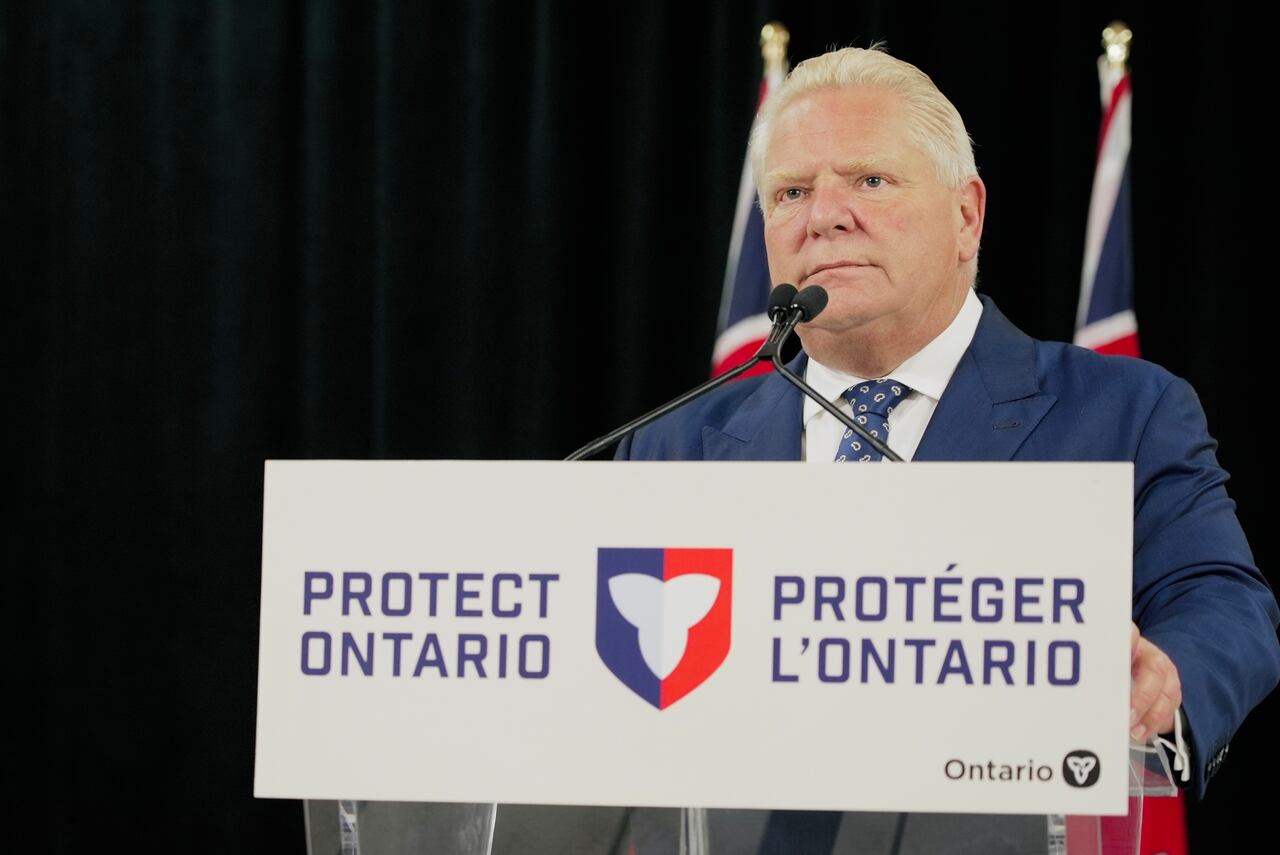
The court’s inquiry into the matter was initiated by an order-in-council from Premier Doug Ford’s cabinet last year. (Tina Mackenzie/CBC)
Bourgeois also described the arguments for and against the ruling as “very strong, thorough, and well-reasoned considerations of the law and facts.”
“Ultimately, it came down to the majority’s conclusion that the model presented to the court was compliant with the law,” he noted.
Billions in Revenue at Stake
This case was initiated by an order-in-council from Premier Doug Ford’s cabinet last year.
The cabinet’s request posed the inquiry: “Would legal online gaming and sports betting still be lawful under the Criminal Code if users were allowed to engage in games and betting with individuals outside of Canada?”
While the court’s ruling may facilitate greater gambling options for Ontarians, Andrew Kim, an assistant professor in the psychology department at Toronto Metropolitan University, cautioned that increased accessibility also poses risks.
“By permitting international players, it creates another avenue for heightened engagement — and the more engagement there is, the greater the potential for harm to Ontarians,” remarked Kim, who is also a Canada Research Chair in addictions and mental health co-morbidity.

Ontario sought a court ruling on whether online gamblers in the province could legally bet with players from outside Canada. (PokerStars/YouTube)
According to industry experts, the stakes also involve hundreds of millions of dollars in potential wagers on online poker and daily fantasy sports betting platforms, which currently cannot legally allow Ontarians to participate with their global player pools.
Online gaming companies report that many poker enthusiasts in Ontario are opting for international platforms instead of provincially regulated sites in search of higher-stakes opportunities. However, Wednesday’s ruling might enable Ontario players to interact with non-Canadians, bringing those gamblers into a regulated environment — potentially increasing revenue for the province.
Provincial data indicates that from April 1, 2024, to March 31, 2025, there was a total of $82.7 billion in wagers and $3.2 billion in gross gaming revenue in Ontario.
Peer-to-peer (P2P) poker games made up a smaller portion of that total, with $1.7 billion in wagers and $66 million in revenue.
The revenue from P2P poker remained unchanged during that time compared to 2023-24, while casino gaming revenue saw a 36 percent increase and betting gaming revenue rose by 23 percent.