

On Tuesday, the federal budget was unveiled, revealing plans to reduce the public service workforce by 16,000 positions, which amounts to approximately 4.5 percent of its total, over the next three fiscal years. This move aims to bring the bureaucracy back to a “more sustainable level.”
An expert described this target as “relatively modest,” despite the fact that federal public sector unions are bracing for significant reductions.
According to the budget, the layoffs are projected to commence in April 2026 and persist until 2029. The government claims that the public service has expanded at a pace “far greater” than the Canadian population, reaching a peak of just under 370,000 employees in 2024.
Finance Minister François-Philippe Champagne stated earlier on Tuesday, “We must restore the civil service to a more sustainable level.”
“However, we will approach this with compassion.”
-
Budget ushers in ‘transformational’ era for federal public service
-
Carney’s 1st budget calls for billions in new spending to prop up tariff-hit economy
As of March this year, there were 357,965 public servants in Canada, with 43 percent located in the National Capital Region, making the federal government the largest employer in the Ottawa-Gatineau area.

Members of the Public Service Alliance of Canada (PSAC) walk in the rain on a picket line outside during a strike in 2023. (Justin Tang/CP)
Out of the 16,000 full-time equivalent positions, 650 will be eliminated from executive roles, which represents approximately seven percent of the executive staff, as per budget documents.
These upcoming reductions are part of a broader initiative to decrease the workforce to around 330,000 public servants by March 2029—about 40,000 fewer than the peak observed in March 2024, according to the budget.
In comparison, last year’s budget had proposed cutting 5,000 public service jobs over several years.
The savings anticipated from restructuring the workforce are included in the government’s strategy to “rein in” expenses and generate roughly $60 billion in savings and revenues across five years.
This plan will help balance Prime Minister Mark Carney’s initial budget, which emphasizes “spend less and invest more,” despite a projected deficit of about $78 billion.
However, MPs must still approve the budget through a confidence vote.
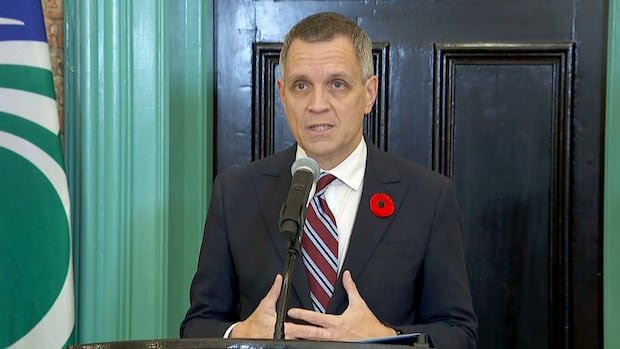
Mark Sutcliffe reacts to the Carney government’s plans and how they may affect the capital.
Ottawa Mayor Mark Sutcliffe expressed that the job cuts were “very concerning.”
“These are members of our community who are facing the loss of their livelihood,” he remarked.
Sutcliffe emphasized the importance of the government developing a transition plan for employees who will leave the public service and seek employment elsewhere.
He also noted that diversifying Ottawa’s economy, particularly through defense spending, along with boosting economic activity in the downtown area, would assist the local economy in adjusting to these changes.

It’s a lot of numbers. Here are the main takeaways.
Part of comprehensive review
Earlier this summer, the Carney administration indicated that cuts to the bureaucracy were imminent, instructing cabinet ministers to identify savings of up to 15 percent over the next three years following a period of increased spending under the Trudeau government.
The public service reductions outlined in the budget are part of the specifics stemming from that comprehensive expenditure review initiated by Ottawa in July.
The budget document states, “The government recognizes that transitions can be challenging and is dedicated to minimizing the difficulties faced by federal employees.”
The intention is to mitigate the effects of these cuts “to the greatest extent possible” through attrition and voluntary departures, alongside a proposed voluntary “early retirement incentive” program through the pension plan set to commence on January 15, 2026, and wrap up within a year. This program is projected to have a net fiscal impact of $1.5 billion over five years, starting this year.
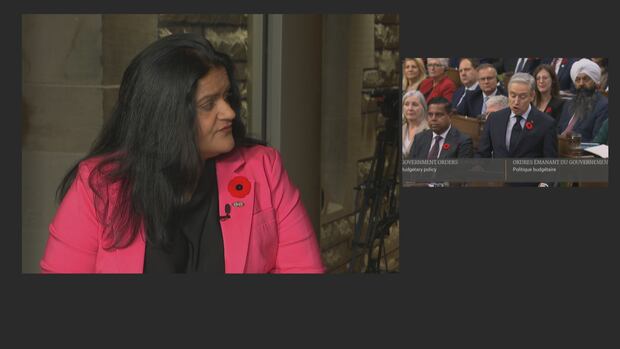
Canada’s proposed budget would cut the number of civil servants to 330,000 by 2028-29, a decline of about 40,000 positions or 10 per cent over five years. Sharon DeSousa, national president of the Public Service Alliance of Canada, called the cuts ‘drastic’ and said there should have been more consultation.
Sharon DeSousa, the national president of the Public Service Alliance of Canada, described the proposed cuts as “drastic” and asserted that they would ultimately necessitate the government to rebuild its workforce.
“I’ve been here before,” she remarked. “I’ve witnessed the public service being cut, dismantled, and reshaped during the Harper era. I’ve seen the repercussions when such measures are taken, and how they eventually lead to staffing increases.
“In 2024, 10,000 positions were eliminated, and … there were delays in responding to [call centre] inquiries due to insufficient staffing. This has consequences, and they end up hiring again.”
In scathing report, AG finds CRA call centres are slow to answer and often inaccurate
In the upcoming weeks, departments are anticipated to communicate specific actions to staff and unions, as stated in the budget document.