

Indigenous leaders are expressing their worries after this year’s federal budget failed to secure funding for crucial reconciliation initiatives past spring 2026, raising concerns about potential terminations or significant reductions.
Following the release of Prime Minister Mark Carney’s minority Liberal government’s inaugural budget on Tuesday, a chart from an annex labeled “Indigenous Reconciliation,” which outlines federal actions since the fall 2024 economic statement, began to circulate online.
The chart indicates that the government has provided additional funding for several essential programs—such as on-reserve education, wellness for First Nations and Inuit children, emergency management, and urban programming—only for the current year. However, columns for subsequent years revealed a series of zeros.
“I am genuinely worried,” stated Assembly of First Nations National Chief Cindy Woodhouse Nepinak during an interview regarding the fate of these initiatives.
Woodhouse Nepinak mentioned that she was informed these are termed “sunset programs”—temporary initiatives with fixed funding or specific end dates—that still require discussion. Nonetheless, the national chief pledged to seek clarification immediately.
“I will inquire with the Prime Minister’s Office today: What exactly is being cut?” said Woodhouse Nepinak, who represents over 600 First Nations chiefs across the country.
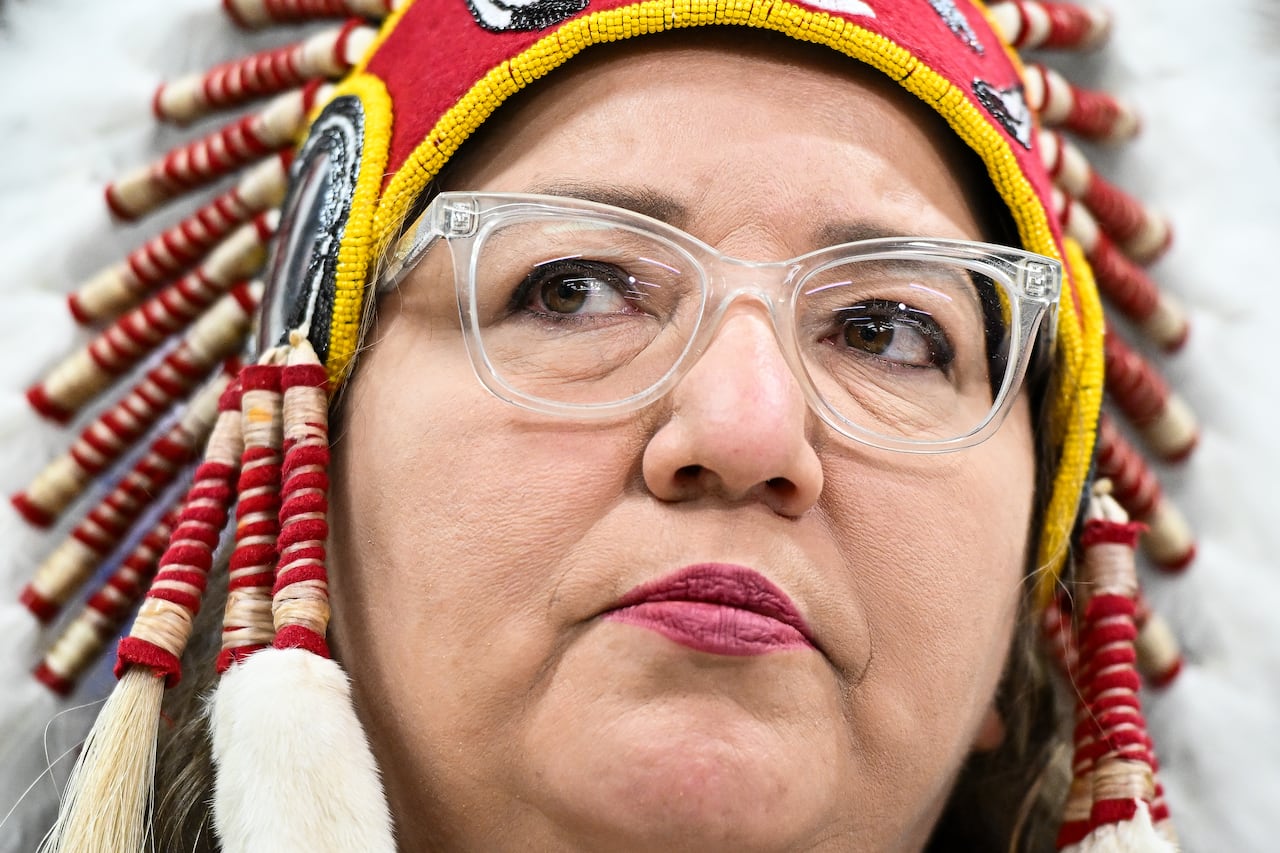
Assembly of First Nations Chief Cindy Woodhouse Nepinak speaks during a news conference in Ottawa on July 16. (Spencer Colby/The Canadian Press)
At the same time, President Natan Obed of Inuit Tapiriit Kanatami (ITK), the national body representing Inuit in Canada, was also reflecting on similar issues.
The Inuit Child First Initiative, which guarantees that Inuit children receive timely access to vital services, is set to end in March and did not receive any new funding in the budget. This situation has led Inuit to consider legal avenues.
“If we find that Inuit are not receiving fair care and opportunities, there are legal actions we can pursue,” Obed mentioned in a phone interview.
“We have aimed to address this outside of the courts in good faith with this government, and we hope to reach that point. However, I trust everyone understands that we will advocate fiercely for our children.”
In a separate interview, Indigenous Services Minister Mandy Gull-Masty indicated that the government aims to modernize the implementation of the programs coming to an end and ensure that the intended results align with community needs, rather than discontinuing them.
“I want to clarify: there are aspects in this budget that have been misunderstood as being zeros. That is not accurate. It is about us identifying those outcomes,” she told CBC Indigenous.
Another initiative scheduled to conclude in spring 2026 that did not receive additional funding is Urban Programming for Indigenous Peoples, which offers essential operating funds for friendship centres located in urban areas.
Friendship centres assist Indigenous individuals in various aspects, including employment, housing, food security, childcare, youth programming, and mental health, as stated by the National Association of Friendship Centres in a media release following the budget announcement.
“These essential services are at risk,” the release cautioned.
“The federal government is failing to uphold the promise made to Indigenous peoples and communities by cutting funding to this program,” remarked Sean Longboat, executive director of the Ontario Federation of Indigenous Friendship Centres.
Mixed reviews
Conversely, the Manitoba Métis Federation expressed satisfaction with the budget, and federation finance minister Anita Campbell downplayed concerns regarding the future of reconciliation programs.
She noted that the budget outlines a plan for the current fiscal year, and the aforementioned chart shows that those programs have been extended for this fiscal year, adding that circumstances can change rapidly.
“When we evaluate this, it aligns closely with our priorities,” Campbell commented about the budget overall.
“We have projects ready to go …. It plays to the strengths that we possess as a government.”
Others expressed mixed sentiments or a tepid response to the budget overall. Should it be approved in Parliament, the budget would cap spending reductions at Indigenous Services Canada (ISC) and Crown-Indigenous Relations and Northern Affairs Canada to two percent.
For ISC, this would mean a reduction of approximately $500 million annually. The two departments would need to cut around $2.3 billion by spring 2030 under this plan.
In terms of new funding, the main commitments include $2.3 billion for safe drinking water in First Nations and $10.1 million for Indigenous consultations on significant projects being expedited through the regulatory framework.
Obed welcomed the spending cap and expressed cautious optimism regarding the new $1 billion Arctic Infrastructure Fund and the Carney government’s stated support for Inuit Nunangat University. However, he voiced serious concerns about the absence of funding for tuberculosis eradication and the Inuit Child First Initiative.
“We have been informed to expect those issues to be addressed in the spring update, but that is not how the federal government has traditionally approached these vital, equity and rights-based initiatives, which raises significant concerns.”
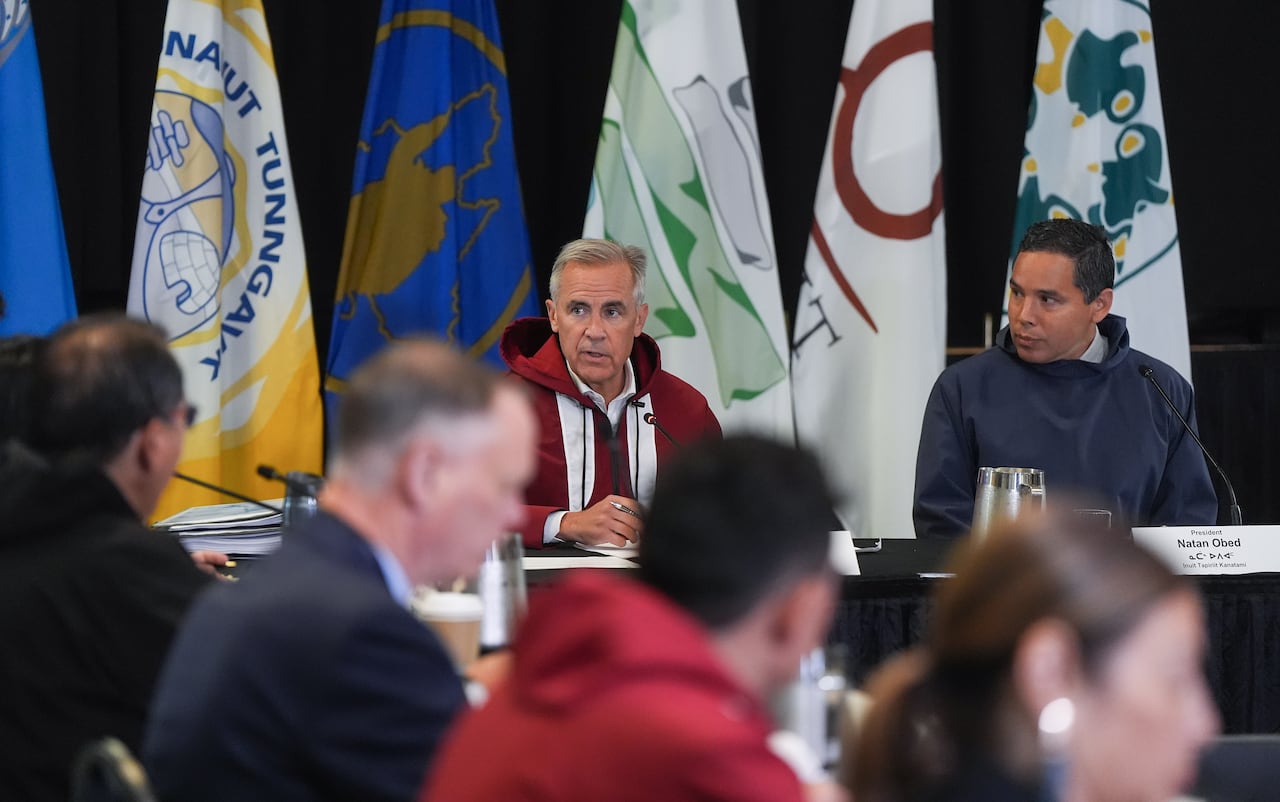
Prime Minister Mark Carney gives opening remarks as Natan Obed, right, president of the Inuit Tapiriit Kanatami, listens during a meeting of the Inuit-Crown Partnership Committee, in Inuvik, N.W.T., on July 24, 2025. (Darryl Dyck/The Canadian Press)
Victoria Pruden, president of the Métis National Council, which represents Métis governments in Alberta and Ontario, indicated that her organization is in a “wait-and-see mode” regarding Carney’s agenda focused on major projects and infrastructure development.
She too expressed cautious optimism about the budget cuts cap at Indigenous departments but noted significant concerns about Carney’s dedication to reconciliation.
“The budget does not reflect the level of commitment we have heard at various times over the past six to nine months,” she stated.
“And indeed, it is very concerning.”