


Researcher David Harasti always knew what he would name the small orange creature he discovered during a dive in Papua New Guinea back in 2003.
It took another twenty years for Harasti and colleague Graham Short to rediscover the elusive fish, study it, and formally classify it as a new species.
Introducing Solenostomus snuffleupagus, named after the famous Sesame Street character, Mr. Snuffleupagus.
“We call it Snuffy for short,” Short, an ichthyologist at the California Academy of Sciences and the Australian Museum, shared with As It Happens host Nil Kӧksal. “The resemblance was striking.”
Short and Harasti have authored a new article, published in the Fish Biology journal, detailing S. snuffleupagus as a fresh species of ghost pipefish inhabiting coral reefs, camouflaging as red algae.
‘The remarkable impact of natural selection’
The fish shares several traits with its namesake, including its orange-brown coloration, long filaments resembling shaggy hair, and elephant-like snout.
Milton Love, a marine biologist at the Marine Science Institute of the University of California in Santa Barbara, mentions that the fish’s muppet-like appearance showcases “the remarkable impact of natural selection.”
“Clearly, the morphological features that we find attractive serve a purpose for the animal,” Love expressed in an email, although he was not involved in the study.
“Alternatively, one could hypothesize that this fish was created by Gaia after a few too many rum drinks with tiny umbrellas.”
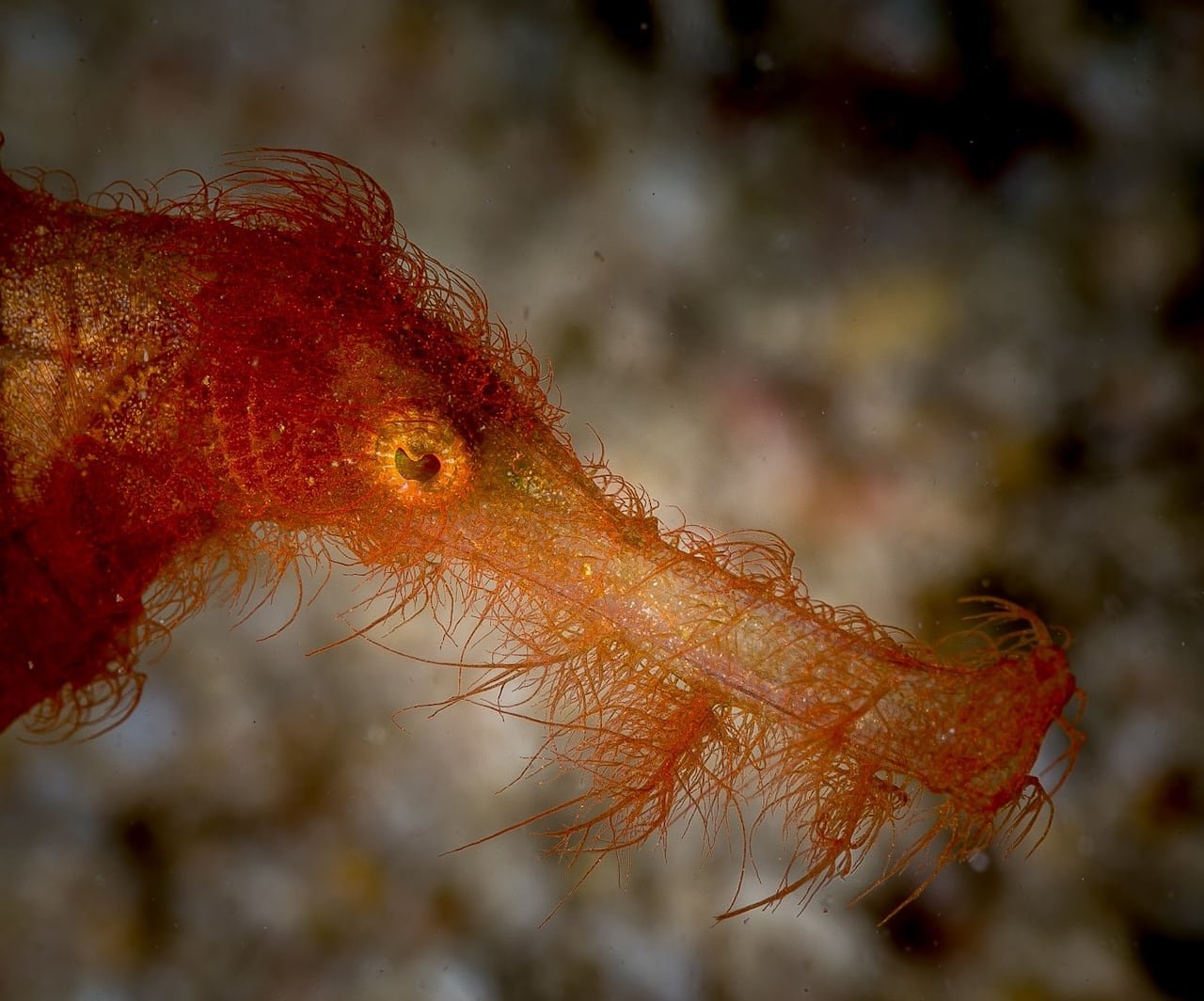
Besides the surface similarities to Snuffleupagus, there is a deeper connection. The fish’s elusiveness mirrors that of Mr. Snuffleupagus, who, in early appearances on Sesame Street, was only seen by Big Bird, leading others to believe he was imaginary.
Harasti and Short spent years searching for another Snuffy fish after the initial 2003 sighting without success.
However, luck turned in 2021 when fellow divers began spotting the creatures on the Great Barrier Reef and contacted the scientists. Short and Harasti traveled to Australia, where they finally found the fish on their second dive.
“It’s an understatement to say that we screamed underwater,” Short recounted. “We high-fived, hugged, and were incredibly thrilled.”
A petite carnivore
To describe the fish and confirm its status as a previously unknown species, the scientists analyzed CT scans of specimens collected in 1993 near Queensland, Australia, in the Torres Strait.
Short mentions that these specimens, gathered alongside hundreds of other fish, were stored until he