

Leaders from the Inuit community who recently returned from a visit to Greenland have highlighted a significant difference in infrastructure between that Nordic nation and Canada’s Northern regions. They are urging the federal government to address these disparities as part of a renewed emphasis on Arctic security.
“They are far ahead of us,” remarked Paul Irngaut, president of Nunavut Tunngavik Incorporated (NTI), which represents the Inuit population in the territory.
“We are often the last priority for the government, especially in the current political climate.”
Irngaut participated in an Inuit delegation that visited Nuuk last week for the inauguration of the Canadian Consulate, a move made to express solidarity against the takeover threats from U.S. President Donald Trump.
This was not Irngaut’s first visit to Greenland’s capital.
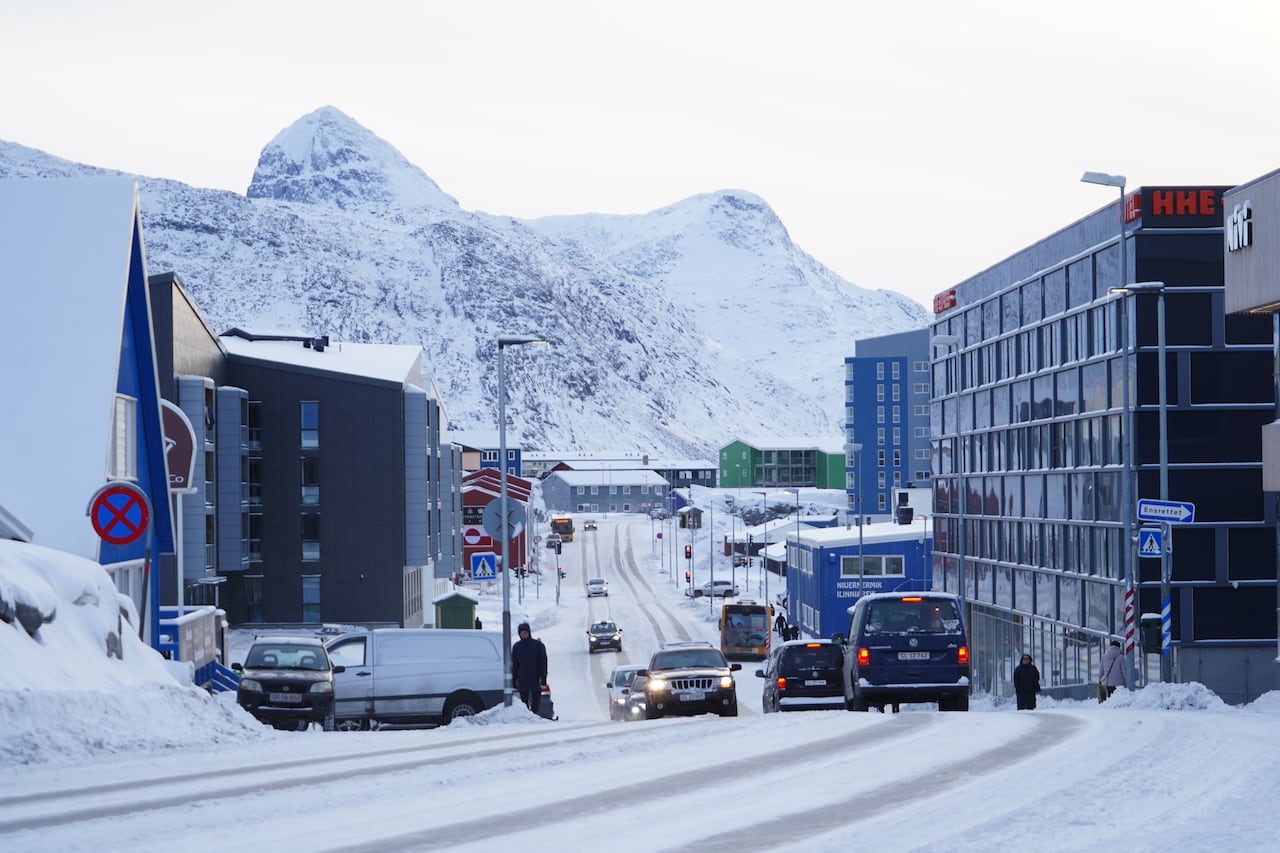
The downtown area of Nuuk has seen considerable modernization over the last decade. (Charles Contant/CBC)
He noted that he visited three years ago to explore the University of Greenland (Ilisimatusarfik) to learn how Inuit in Canada could establish their own university.
“What we aspire to see in Nunavut is a facility like that,” Irngaut expressed.
The university is merely one of several examples of progress in Greenland that Inuit leaders believe is necessary for Canada, especially as the federal government plans to allocate tens of billions of dollars in upcoming years toward defense and Arctic security.
Stability and sustainability
Every community within Inuit Nunangat, the Inuit homeland in Canada, relies on diesel power, with the exception of Inukjuak, Quebec, which is transitioning to hydroelectric power. In contrast, most communities in Greenland already utilize hydro power.
There is just one deepwater port in Inuit Nunangat, situated in Iqaluit. It encounters more challenges due to seasonal ice compared to Nuuk’s deepwater port, which has the capacity to handle cargo in ways that no port in the Canadian Arctic can.
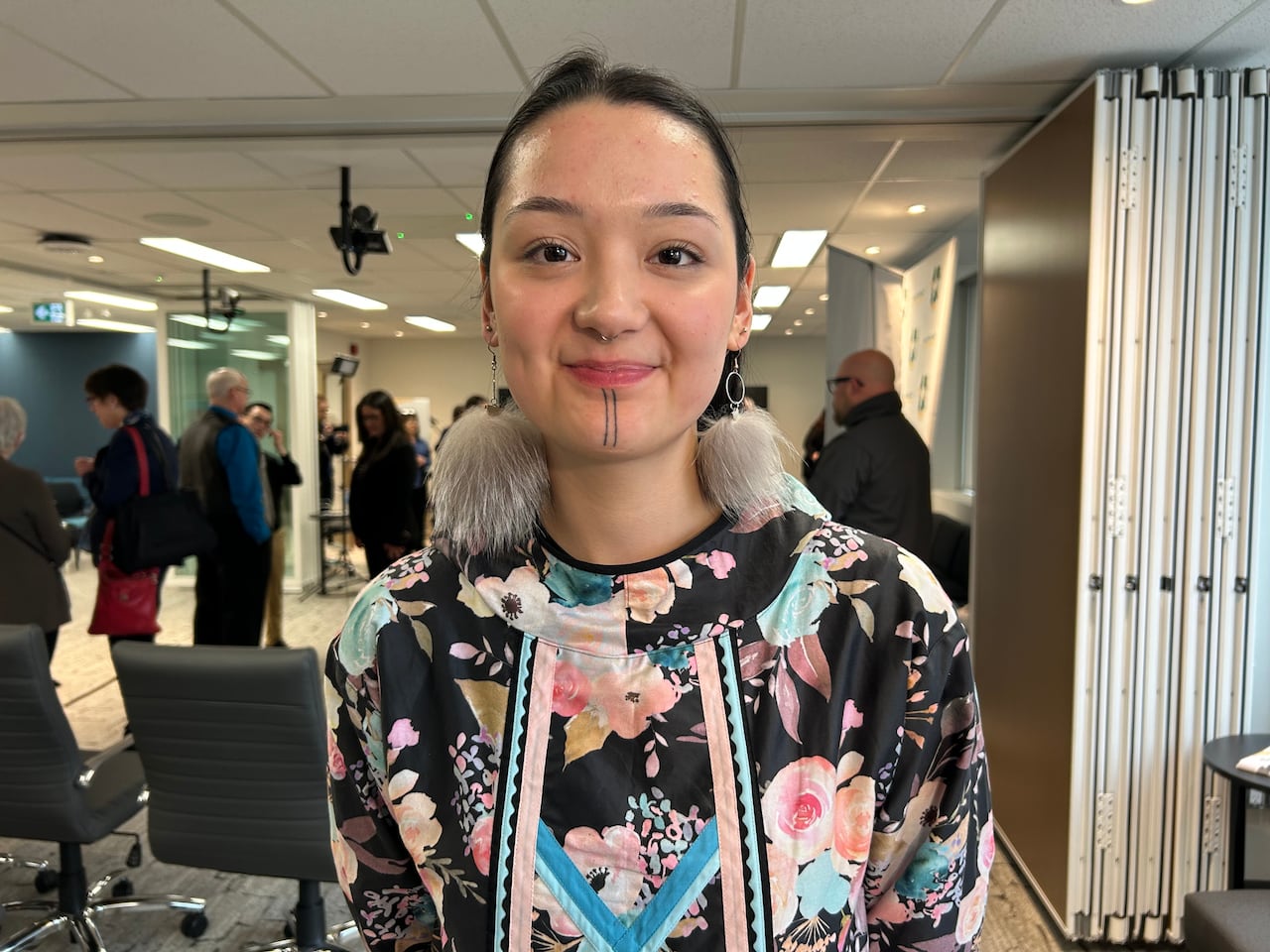
Chelsea Uppahuak-Prusky, 21, believes that an Inuit-led university in her hometown of Arviat, Nunavut, will change lives. (Olivia Stefanovich/CBC)
In addition to infrastructure, the education system in Greenland employs Kalaallisut, the language of Greenlandic Inuit, as the primary language for post-secondary instruction.
Conversely, Inuktitut, the language of Inuit Nunangat, is not the main language of instruction for the majority of Inuit students in their homeland.
“These are all aspects we wish for here in Canada,” stated Natan Obed, president of Inuit Tapiriit Kanatami (ITK), the national advocacy organization for Inuit in the country.
“We hope that with the current focus on the Arctic, the Canadian government will not view this solely through the lens of militarization and the construction of facilities to support military operations, but also consider the vital functioning, stability, and sustainability of our communities.”
Federal funding for Inuit-led university
Regarding the establishment of a university in Inuit Nunangat, the hamlet of Arviat was selected by ITK earlier this week to serve as the main campus location.
Inuit leaders are still awaiting a commitment from the federal government for its share of funding for this initiative, as well as legislation that would allow the university to function across various jurisdictions, including Nunavut, the Northwest Territories, northern Quebec, and Labrador.
Young residents from Arviat shared with CBC News that the establishment of the university will significantly impact the lives of individuals in their homeland.
“It will create numerous opportunities because I know how challenging it is for many Inuit to relocate thousands of kilometers away just to attend school,” expressed Tyson Prusky, 19, a resident of Arviat.
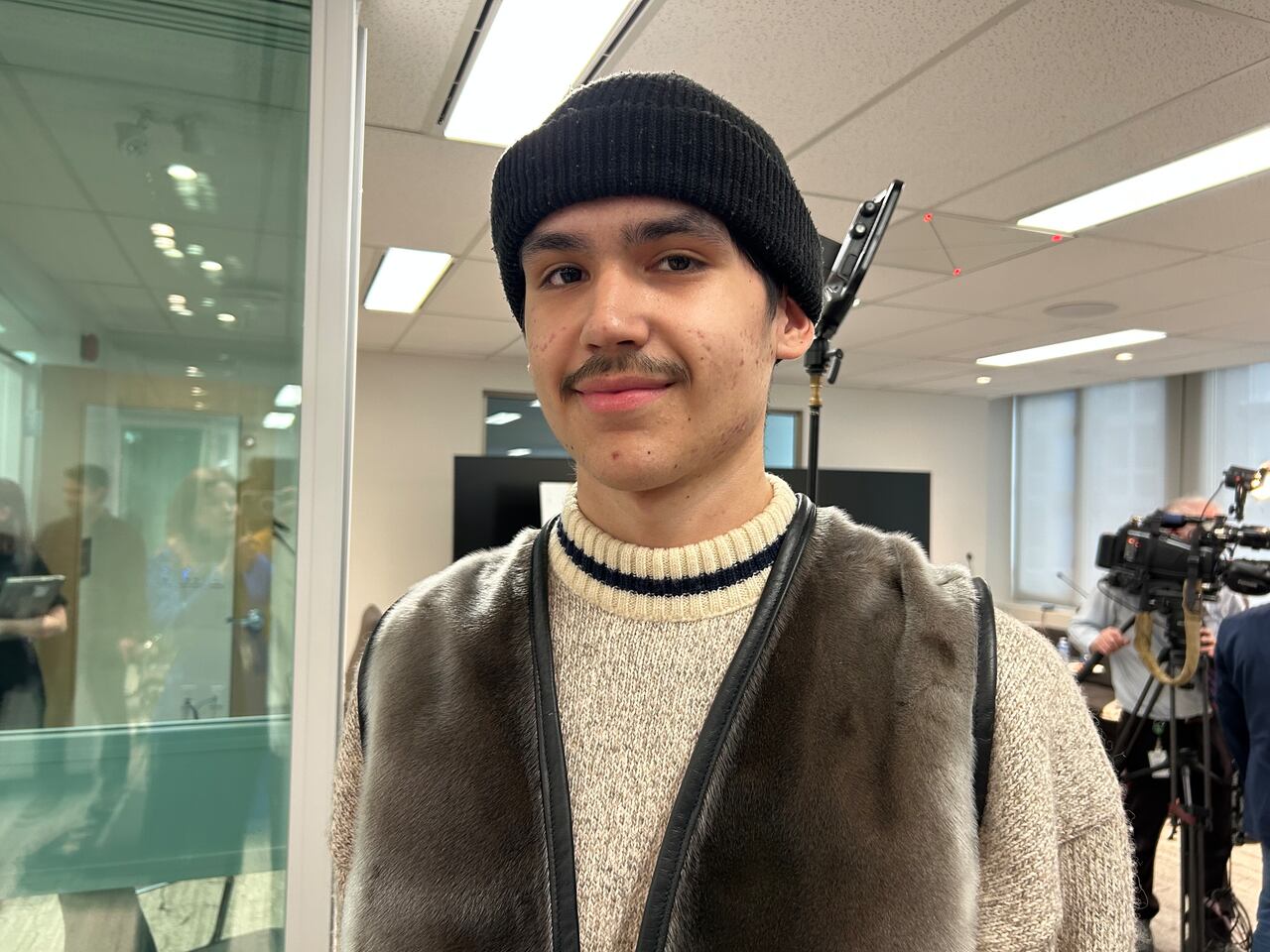
Tyson Prusky, 19, believes that a university in Inuit Nunangat would help youth stay connected to their culture and homeland. (Olivia Stefanovich/CBC)
Prusky can relate to this experience. He and his 21-year-old sister Chelsea are currently attending Nunavut Sivuniksavut College in Ottawa.
“It was such a tremendous leap,” she recounted. “I despised the three-hour flight from [Iqaluit] to Ottawa. Just taking that step out of my comfort zone required so much courage.”
They both expressed their intention to apply to the new Inuit Nunangat University once it opens in 2030, whether as students or faculty.
“I never thought it would be possible,” she remarked. “The emergence of that opportunity for future generations means a great deal.”
-
Some Greenlandic Inuit say work on independence from Denmark will come amidst fight against U.S. threats
-
Inuit leaders celebrate milestone trip as Canada opens Greenland consulate
Canada’s sole university located in the Arctic region is in Yukon, which is outside of Inuit Nunangat.
Irngaut emphasized that federal support for an Inuit-led university, as well as housing and other essential needs, would significantly reinforce Canada’s presence in the Arctic.
“It demonstrates that Canada values its Inuit population,” Irngaut stated. “That they prioritize our youth and endorse higher education for Inuit.”