

Canadian astronaut Joshua Kutryk has returned safely to the International Space Station following the successful completion of his second spacewalk within a fortnight.
On Thursday morning, Kutryk and NASA astronaut Anil Menon ventured into the vacuum of space after extensive preparations alongside their support team.
Kutryk was the first to exit the Quest airlock, distinguishable by the red stripes on his spacesuit legs, which set him apart from his partner.
This marked Kutryk’s second spacewalk, having become the fifth Canadian to achieve this milestone on October 29, when he and Menon collaborated to install new solar arrays essential for enhancing the station’s power capabilities.
According to NASA, this was Menon’s fifth spacewalk.
The recent spacewalk lasted just under seven hours, officially recorded at six hours and 59 minutes before the crew returned to the station.
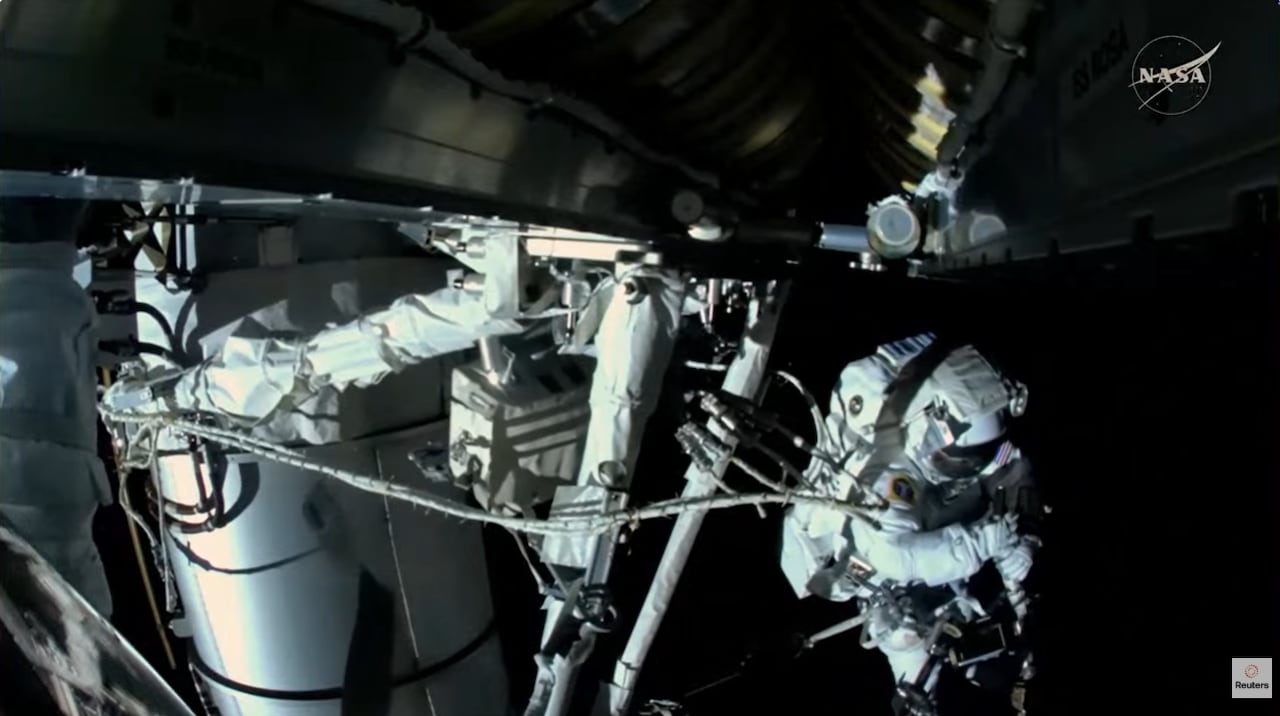
NASA astronaut Anil Menon works on the exterior of the International Space Station on Thursday. (NASA)
The astronauts focused on installing the eighth and final solar array on the starboard section of the truss, which acts as the structural backbone of the station.
NASA’s broadcast of the spacewalk showcased the duo working meticulously with their tools while secured to the space station, occasionally with Earth visible in the backdrop.
Spacewalks are risky yet essential
The Canadian Space Agency highlights that spacewalks rank among the most challenging and perilous endeavors for astronauts, necessary for the installation or repair of equipment and executing manual tasks.
-
A spacewalk to remember: Canadian astronaut Joshua Kutryk says seeing Earth ‘changed’ him
-
Canadian astronaut Joshua Kutryk conducts his 1st spacewalk
Initiated in 2021, the effort to upgrade the solar arrays aims to boost the station’s power-generating capacity by as much as 30 percent, as per the agency’s report.
Prior to Kutryk, the last Canadian to undertake a spacewalk was David Saint-Jacques in 2019.
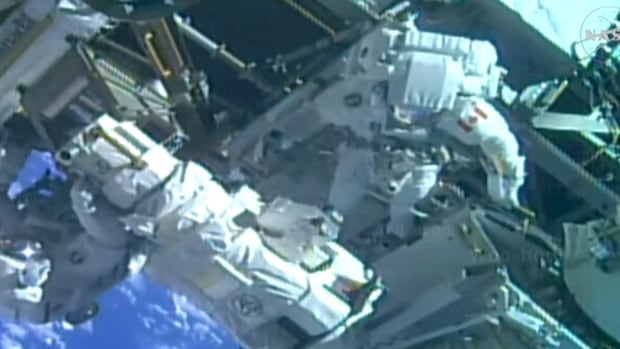
A significant day for Canada’s space program as Canadian astronaut Joshua Kutryk installed solar panels on the International Space Station during his first spacewalk, while fellow Canadian astronaut Jenni Gibbons managed capsule communications.
Kutryk and his team launched towards the International Space Station on October 1 for a mission that is projected to last six months.
The Canadian Space Agency noted that several Canadians were instrumental in the spacewalk conducted on Thursday. Among them was CSA astronaut Jenni Gibbons, who served as the capsule communicator, or CAPCOM, from Houston.
The Canadarm2 robotic arm assisted in moving the solar array, with support from CSA teams located in Longueuil, Quebec.
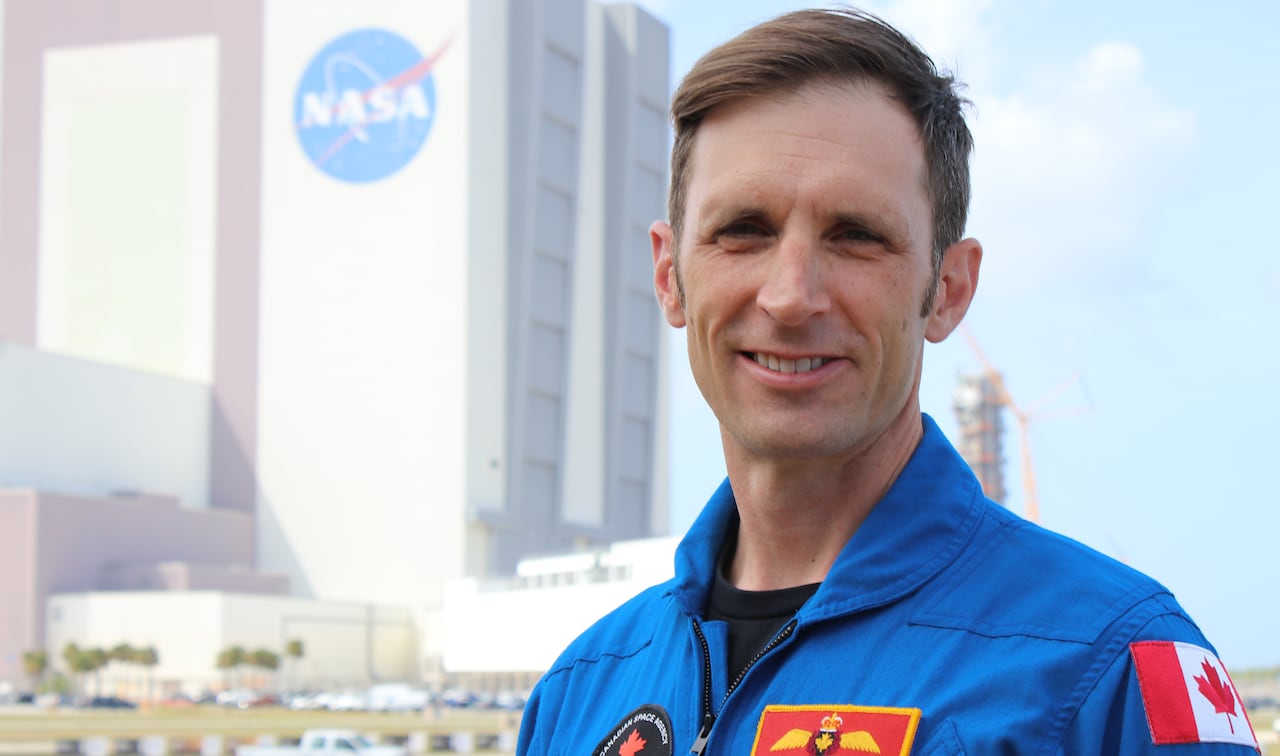
Canadian astronaut Joshua Kutryk is depicted at the Kennedy Space Center on Merritt Island, Florida in March 2026. (Kelly Malone/The Canadian Press)