

Just days prior to the federal budget announcement, the CEO of the prominent Swedish company Saab traveled to Ottawa to confer with the nation’s leading bureaucrat, igniting speculation about a potential agreement between the Canadian government and the defense manufacturer.
Insiders noted that Michael Sabia, the clerk of the Privy Council, adjusted his busy schedule on October 31 to meet with Micael Johansson, underscoring Canada’s desire to acquire military equipment from Europe and enhance its domestic manufacturing capabilities.
Further indications are anticipated when King Carl XVI Gustaf and Queen Silvia of Sweden head a business and political delegation to Canada from November 18 to 20. This state visit will also feature Sweden’s deputy prime minister, Ebba Busch, and defense minister, Pål Jonson, along with over 60 representatives from the Swedish business sector.
The Wallenberg family, one of the wealthiest in the world, will be part of the delegation. Their investments include significant stakes in telecommunications leader Ericsson and Saab, a major industrial entity producing Gripen fighter jets and the GlobalEye surveillance aircraft.
With planned visits to Ottawa and Montreal, the delegation aims to reinforce Canada’s military ties with another NATO and Arctic nation, shortly after the Carney administration announced $82 billion in fresh defense funding.
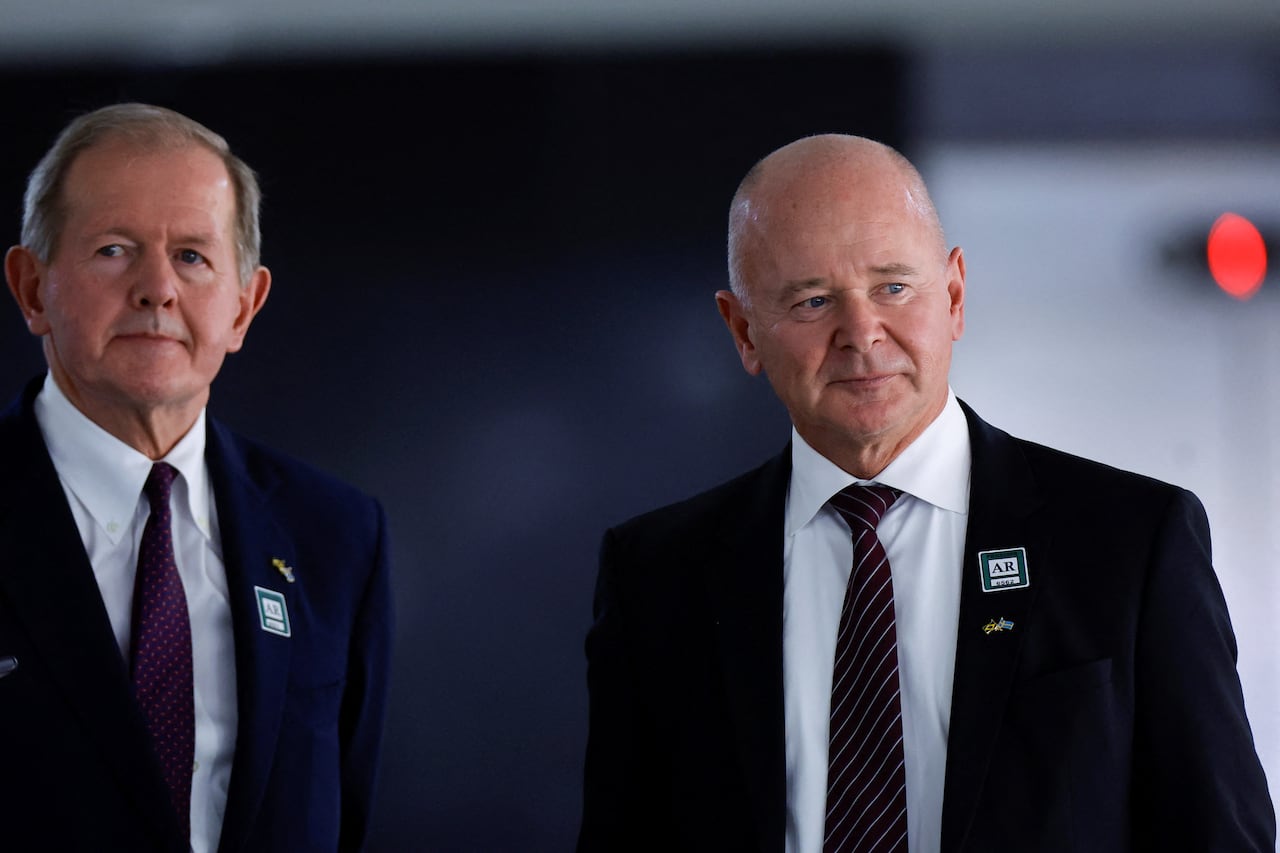
Saab chairman Marcus Wallenberg and CEO Micael Johansson, as seen in a file photo from 2023, are set to visit Canada in mid-November. (Ueslei Marcelino/Reuters)
The delegation plans to visit Bombardier’s facilities in Montreal, emphasizing the company’s interest in collaborating with Saab to produce Gripens for the Canadian market and potential customers like Ukraine.
“Saab intends to significantly increase its operations in Canada soon. The company sees Canada as an ideal partner due to its skilled workforce, capable of supporting a substantial rise in global demand,” stated Simon Carroll, president of Saab Canada.
“Both nations are interdependent, particularly in today’s intricate global environment,” added Christina Keighren from Business Sweden, the organization that facilitated the commercial delegation.
The visit occurs against the backdrop of deteriorating Canada-U.S. relations since President Donald Trump took office in January. In March, the Carney government revealed plans to reassess its order of 88 F-35 fighter jets from the American company Lockheed Martin, following Trump’s ongoing criticisms of Canadian sovereignty.
Canada remains committed to acquiring at least 16 F-35s, but discussions are increasingly focusing on a mixed fleet of both F-35s and Gripens for the Royal Canadian Air Force.
Analysts indicate that operating the Gripen E is significantly less expensive compared to the F-35, yet maintaining and running two different fleets could incur additional costs, particularly related to pilot training and infrastructure requirements.
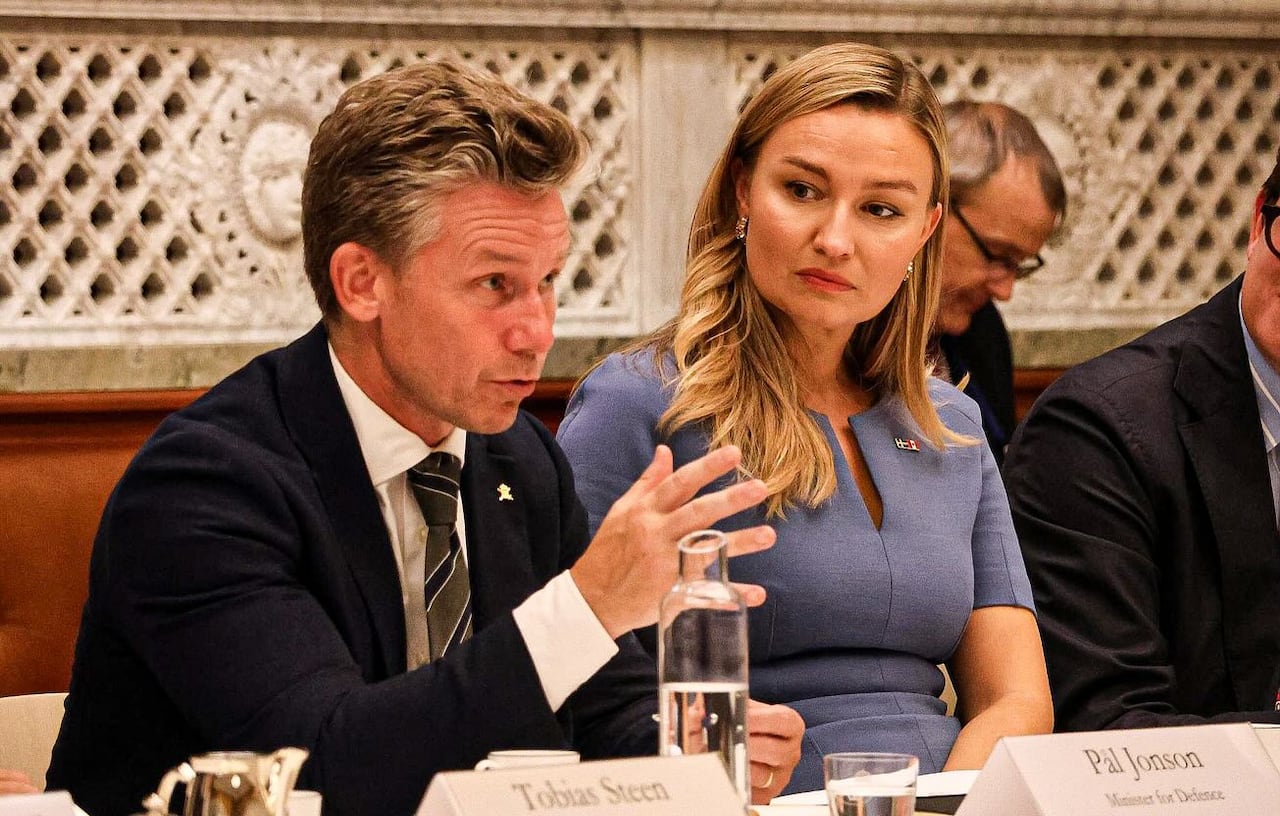
Swedish Defence Minister Pål Jonson, left, and Deputy Prime Minister Ebba Busch will participate in the economic mission next week. (Mélanie Joly/Facebook)
Since the initiation of the F-35 review, Bombardier executives have met three times with Innovation Minister Mélanie Joly—in May, June, and July, according to the federal lobbyists’ registry.
In August, Joly took the initiative to arrange a visit to the Saab facility producing Gripen-E fighter jets in Linköping, Sweden.
For Canada, the royal visit led by King Carl is perceived as a chance to bolster its partnerships with European nations.
“The critical question is whether we prefer to align more closely with the United States or with Europe,” remarked a senior government official.
Radio-Canada has granted anonymity to some sources who were not authorized to publicly discuss the ongoing talks between Saab and Bombardier, or the strategies of the federal government.
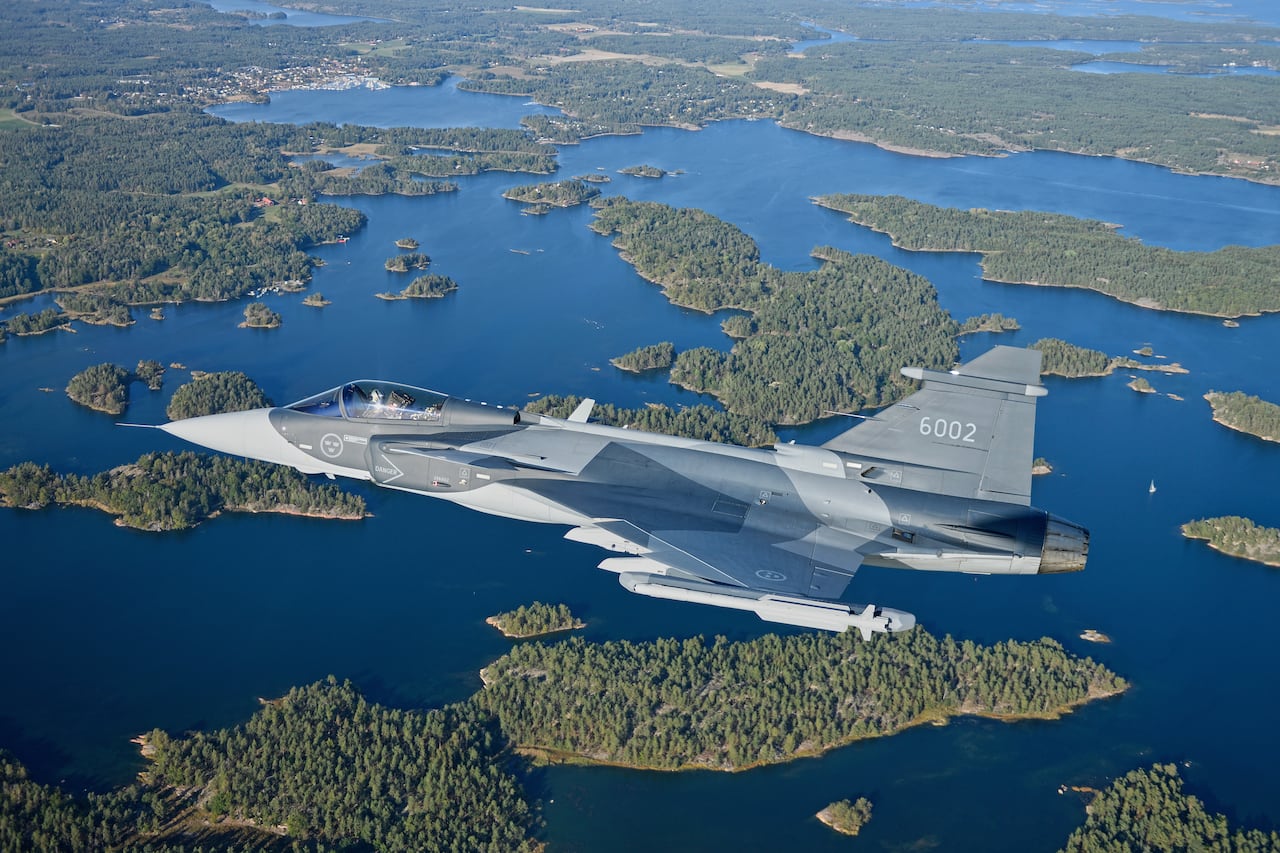
A military aircraft from the Gripen-E series of the Swedish company Saab. (Jamie Hunter/Saab AB)
Political analyst Justin Massie expressed his understanding of Canada’s push to diversify its alliances.
“Choosing a partner country means we believe we can collaborate for many years, perhaps decades, with that partner being reliable and committed to a mutually beneficial relationship,” noted Massie, a professor at the Université du Québec à Montréal (UQAM).
“That’s why tensions in Canada-U.S. relations are particularly damaging when an American president initiates tariff conflicts with neighboring countries.”
According to Philippe Lagassé, a political scientist at Carleton University, Sweden serves as an exemplary model for Canada.
“There are numerous lessons to be learned from Sweden—not just at the military level, but also concerning the defense industry. Sweden has successfully developed an autonomous industry that thrives internationally,” said Lagassé.
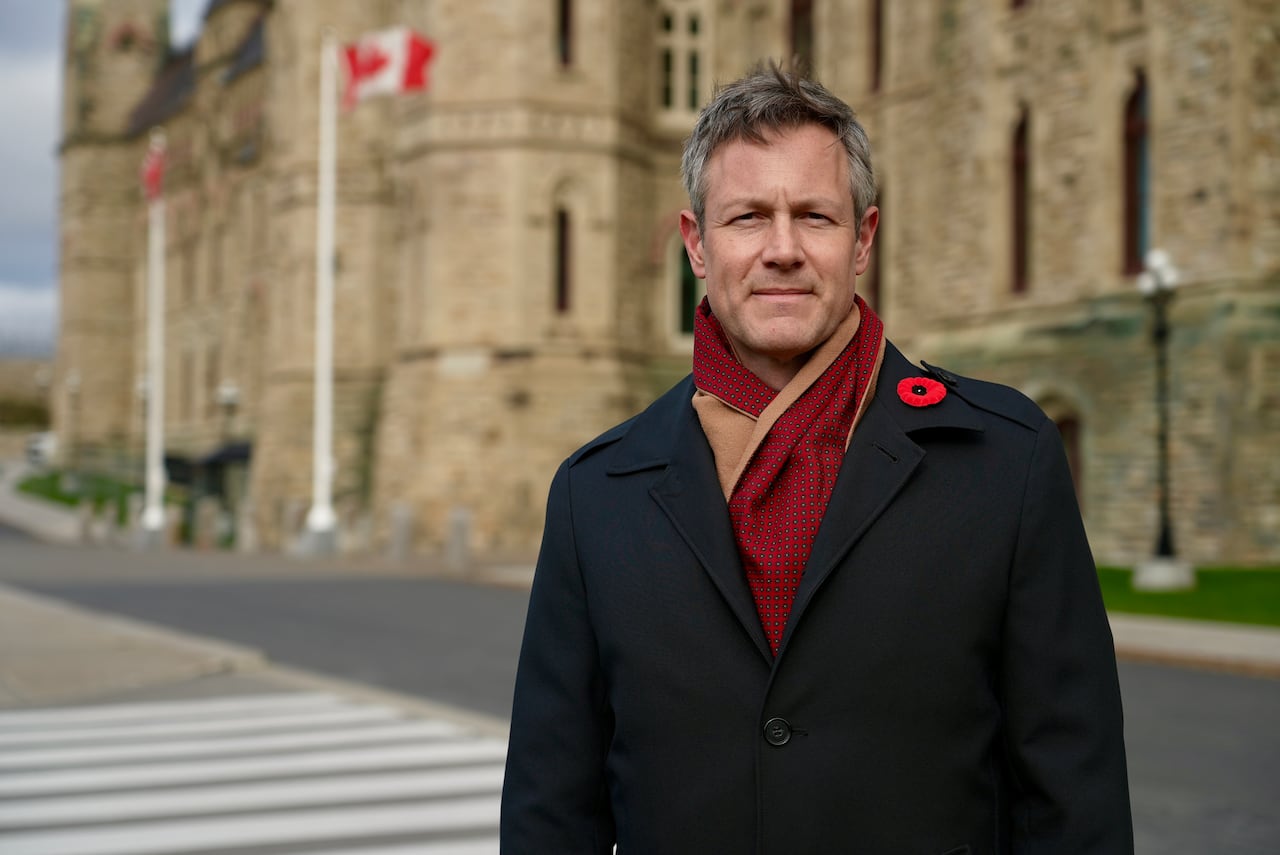
Philippe Lagassé, a professor at Carleton University’s Norman Patterson School of International Affairs in Ottawa, believes that Canada needs to diversify the sources of its military equipment. (Radio-Canada / Simon Lasalle)
Currently, around 75% of Canada’s military acquisitions originate from the United States. To mitigate this dependency, the federal government has been fostering partnerships with countries such as Sweden, Germany, and South Korea, who are the final candidates to provide Canada with a new fleet of 12 submarines.
Several sources indicate that the Carney administration has shown particular interest in the GlobalEye aircraft to fulfill its plans for acquiring Canadian airborne early warning and control (AEWC) capabilities; Saab’s detection and radar systems are already integrated into Global 6500 business jets produced by Bombardier in Toronto.
In fact, sources have reported that Saab representatives have recently engaged in high-level discussions with the Ontario government under Premier Doug Ford.
Another potential project—again utilizing the Global 6500—could be the Phoenix AEWC aircraft, developed in partnership with L3 and Israel Aerospace Industries, while a third competitor for the contract is Boeing’s E7 Wedgetail.
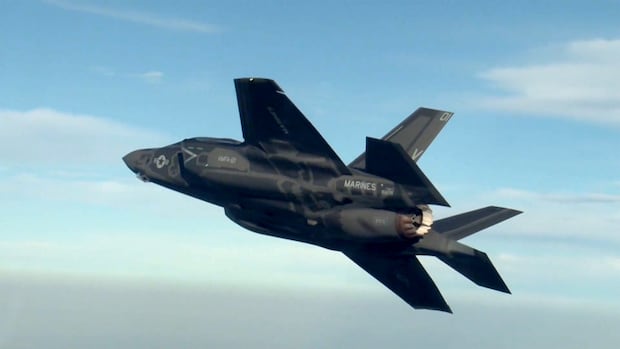
Rising U.S. trade tensions have some questioning if American-made fighter jets are still the right decision for Canada. For The National, CBC’s David Common looks at what goes into building the F-35 and finds a surprising Canadian contribution.
Historically, the Canadian Armed Forces have primarily relied on American manufacturers for their aviation equipment, including Lockheed Martin, Boeing, and Sikorsky.
Boeing has emphasized its longstanding presence in Canada, exceeding 100 years, and has contributed over $15 billion in industrial benefits to the Canadian economy. The company also highlighted that its E7 Wedgetail has been acquired by the armed forces of Australia, South Korea, Turkey, the United States, and the United Kingdom.
“We are prepared to assist the Royal Canadian Air Force in meeting its capability requirements,” stated Al Meinzinger, president of Boeing Canada.
Nonetheless, Canada could enhance its independence by broadening its sources of military supplies.
“The United States, and likely even the president, will exert pressure on Canada to procure American systems to help defend the continent. However, it is crucial to acknowledge that, as a sovereign nation, we must be able to make our own decisions,” explained Lagassé.
As part of its proposal, Saab has expressed its willingness to share its intellectual property with Canadian firms and integrate them into its global production network.
Sweden’s readiness to share its technology could provide a long-term benefit, Massie noted, particularly if Canada engages in developing future generations of fighter aircraft.